


What a weekend I’m having! I won’t even go into it because I don’t want to think about it anymore, but when I sat down last night to do my blog post, my rotten weekend decided to go from BAD to WORSE! I went to edit the pictures I’d taken and POOF, they were gone! I don’t have the slightest clue what happened, they simply aren’t anywhere to be found! This was ALMOST the straw that broke the blogs back — but I decided to dig down deep and proceed to Plan B. (Oh how I wish I really had a plan B!)
Since it was VERY late at night when I discovered this disastrous turn of events, I went in search of something “quick & dirty” (as we used to say in the TV news biz) that I could throw together. I decided to dig deep into my ‘One Good Thing By YOU’ collection of ideas, and for some reason this sweet little gem stood out. How to HAND WASH your dishes! I know the majority of us probably have dishwashers, but I also know there are plenty of times when there are more dirty dishes than even that can handle. (And if you’re like my daughter Britta, and your apartment doesn’t have a dishwasher, hand washing is the ONLY option!)
So here is a step-by-step guide to hand-washing your dirty dishes, by someone who knows their way around the kitchen sink — one of my savvy readers! :-) (I’m sad to say I don’t have the name of the person who submitted it, so if you’re out there and recognize it, please leave a comment! I would love to give credit where credit is due.)
Thank you mystery reader for saving my bacon (and post) for today!
Mystery reader writes…
- For those, like me, who are not blessed with dishwashers AND have a sink of dirty dishes, start by taking all the dishes out of the sink. Sort by glassware, silverware, plates/bowls, plastics, & pots/pans.
- Pots & pans can soak with hot soapy water in them, on the stove while following these steps:
- Fill the sink with hot, soapy water.
- Add the plates/bowls, glassware & silverware.

- Take a 15-minute break. Check emails, call a friend, read another chapter of your book. Allow the hot, soapy water to do its magic!
- After 15 minutes, sponge the glasses & dishes, rinse with hot water,

- …and put in the dish drainer (leaving silverware in the sink.)

- Now add the plastics & enough hot water to cover them.
- After another 15 minute break, put dry glassware & dishes in cabinets.
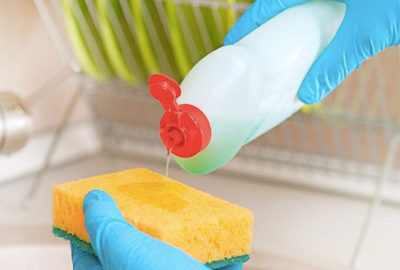
- Soap your sponge with the dish soap, and wash the plastics, rinsing with hot water, then put in drainer.
- This is also the time to finish the silverware!

- Lastly, if there were any pots soaking, you are now ready to finish the washing.
- Dry pots & pans & put in cabinets.

- Take another short break and when you return to your “clean” dishes, go ahead & put the plastics & silverware away.

- Wipe off counters & stove top, refrigerator door handle & anything else with a smudge and enjoy a job well (and efficiently) done!

Being your own dishwasher can be a pain, but it’s amazing how some simple techniques like these can make a big difference!

What are your tips for washing dishes efficiently?


A splash of vinegar added to the hot soapy water helps cut grease and makes everything sparkle.
Please log in or create a free account to comment.Oh, I love this idea! Never thought of it but it is just what will work for our glassware. Thanks!
Please log in or create a free account to comment.Very good idea! Our water is so hard and everything ends up spotty. I use vinegar in the dishwasher but never thought to use it when hand washing.
Please log in or create a free account to comment.The vinegar also cuts out strong odors (fish, onions, chicken broth, baby formula, etc).
Please log in or create a free account to comment.I don’t know how on earth I never heard of this before & I’m 39!! I love the idea of using vinegar because our water is City Well & SMELLS like bleach/Chlorine combo just running the water. Yea, we don’t drink or cook with it. I don’t need to add the bleach, it’s already in there!!!
You don’t need bleach or antibacterial soap! Regular hand soap will do just fine! Ditch the bacteria holding sponge and use a wash cloth. I’ve been using a wash cloth and homemade bar soap for years. A wash cloth is just the ticket and can be washed out and dried unlike a sponge with deep pores that trap food particles.
Please log in or create a free account to comment.Totally agree. Plus, with cloths you’re not buying expensive sponges every other week.
Please log in or create a free account to comment.Totally agree on NOT using antibacterial soap! That’s how the antibiotic-resistant bacteria get their start.
Please log in or create a free account to comment.I’m with you. I refuse to have it in the house. If we’re ill, like me this week, peroxide in the dishwater or wash dishes, spray eith it, hot water rinse, drain dry. Sponge can be microwaved (also steams up microwave for easier cleaning) toss it ib dishwasher with rest of dishes daily or toss into washing machine.
Would love to hear about your homemade soap process and recipe!
Please log in or create a free account to comment.Hi Renee,
I make my soap with used fryer oil. Whatever you fry with or can get a hold of will work fine. Or you can use animal fat. It doesn’t matter if it’s dirty and smells like fish and onions. It will not smell after processing. I use the hot process method. You can find recipes on line. You do not need to use any fancy oils or fragrances or complex mixtures of different oils. Here’s an idea of what it looks like. http://allcrafts.tripod.com/
I have been married 38 yrs and never had a dish washer. I also come from a large family, so hand washing is the norm for me. I have watched friends use their dishwashers but honestly feel my way gets them cleaned in just the same amount of time as it takes to pre clean and load a machine.
Please log in or create a free account to comment.I will admit to redoing the dishes after my hubby or kids! A little fussy I guess.
I prefer to let my dishes air dry, except for my new stainless,,copper based pots and pans. Love them but could use guidance on proper way to wash and care for them!
I am so with you Kathee! 58years old, married almost 40 years and I don’t even know how to us a dishwasher and don’t want to. I never have to worry about breakdowns, leaking water every where or having the noise. Yes I know they making them so you can “hardly” hear them, but you can! I hate the smell and taste of bleach so instead I use a little vinegar in my dish water and rinse. NO SPOTS and I get shine and clean! Love that! Plus I like having the storage where the washer would go.
Please log in or create a free account to comment.Kathee,
I have been caring for stainless steel Lifetime Cookware and copper bottom Revere Ware for 50 years.
To ‘polish’ the cookware after washing and rinsing, I use a product called “Barkeeper’s Friend” and a Scotchbrite (or equivalent) Delicate Care sponge . (Try to find Barkeeper’s Friend. Other products on the market simply DO NOT work as well.)
Your pans should be damp but not wet. Dampen the sponge, sprinkle a LITTLE Barkeepers’ Friend INSIDE the pot and polish with the scrubbing side of the sponge, then do the same to the outside. Wash well in the dishwater (using a cloth to be sure you have wiped all surfaces) and rinse.
To prevent oxidation of the copper, the bottom should be dried immediately, otherwise the remaining pots can air dry if you prefer.
Rinse the sponge well and let air dry. If you are concerned about any germs in the sponge, pop the WET (not dripping) sponge in the microwave for 1-2 minutes on high. The steam generated by the water in the sponge will kill the germs. I do this with my dish cloths. They go in smelling ‘dishwater funky’ and come out smelling like wet fabric!
I always make polishing the last step as the Barkeeper’s Friend seems to deactivate the effectiveness of the dish soap. And I polish, not just for the pretty, but because it affects how the cookware functions. If I don’t polish, the residue left prevents the pan from heating evenly. That’s the only time when my food sticks and burns, (unless I’m just being careless and/or cooking with too high a heat).
Hope this helped :)
Gramma Lu
Please log in or create a free account to comment.T’Rivers, WI
I am not that fussy when washing dishes but have my particulars when rinsing. My Wonderful husband helps out and it makes me cringe when he fills the second sink (only wiping it a little with a damp rag) with water and dips the dishes before hitting the drainer. Before long the “rinse” water is grayish and has some bubbles… He also uses a drying towel and wipes the dishes and puts lids back on anything that looks like it should have a lid. I have actually found a blender container with damp pieces of food sealed in it a week later… Is it just me or does anyone else want to redo the dishes??? I have looked all over for a website on instructions on how to do a great job washing dishes and WHY. I don’t think it exists. For now I refuse help in the kitchen.
Please log in or create a free account to comment.Greta, I hate the way my dear husband washes the dishes and rewash them when he’s not looking. My job is to wash (and rinse) the dishes and my husband’s job is to put the clean dishes away.
Please log in or create a free account to comment.That is so funny, Tina :-)
I soak the silverware in a large bowl or pan so I don’t have to worry about stabbing my gloves and making a hole.
Please log in or create a free account to comment.This just makes me laugh and laugh. I’ve lived 40 years and been washing dishes 35 of those and only used a dishwasher for 4 days while on holiday. My tip – just get it done. All these 15 minute breaks are just so funny to me.
Please log in or create a free account to comment.I questioned the breaks, too. Wash as you cook and get ’em done as quickly as possible. There are times I’d like a dishwasher but not enough to spend the money on one.
Please log in or create a free account to comment.I agree! With all those breaks, it would be midnight before I finished! Just use hot water and washing up liquid and get on with it. No bleach.
Please log in or create a free account to comment.Amen!!
Please log in or create a free account to comment.I do this as well so I’m a little offended. The 15 minute breaks are for the detergents and hot water to do their job and kill any bacteria like ecoli, salmonela, liseria, colds, flu etc. I usually run and switch the wash or find some other chore to do so each sink full is soaking for several minutes.
Please log in or create a free account to comment.Detergent and hot water will not kill bacteria.
Hot water and soap do kill bacteria. Way back in the days of the plague, many people that washed their hands managed to avoid the illness, this antibacterial things is a “ned” and dangerous fad. Those soaps kill off the good bacteria we need in our bodies…it doesn’t discriminate
I completely agree. All those 15 minute breaks lol – anyone would think washing dishes is hard work. I can wash a big load of dishes completely in 15 minutes. Why would I want to have to keep coming back to it when I can just get it over with quickly?
Please log in or create a free account to comment.And (shock/horror!) I don’t wear gloves either!! ;-)
I wash as I use when I’m cooking or baking. And as dishes are used at mealtime, into the hot soapy water they go. I let pots dry on a thick towel on the counter.
Please log in or create a free account to comment.I agree with this. I wash all pots, pans, cooking utensils, etc., as I cook. They are not left to crust and harden, just to soak later. Right now I’m in S. America where we don’t have hot water in the kitchen sink, so we heat water to wash and then have to rinse in cold water! I hate it, but it is what it is. Dishes come out just fine. Also, if you wash immediately after a meal, there is no need to let dishes soak. I actually love getting my hands in hot soapy water and frequently hand wash the dishes even when I have a dishwasher. Amazing there are so many opinions about washing dishes!
Please log in or create a free account to comment.Especially when fixing big meals for family gatherings, as soon as the food is placed in serving dishes, I immediately put the pots and pans, cooking utensils, etc. into soapy hot water. Then, after the meal is over, these are washed, dried and put away. Cleans off the counter tops to put the plates, glasses, etc. that needs to be washed and avoids the need to scrub.
Please log in or create a free account to comment.I’m blessed with a (working) dishwasher at the moment but we have moved a lot where I have not been so “fortunate” or just plain ol preferred my own job over some “dishwasher” (lol). I still handwash my children’s plates/utensils, pots and pans and things like the potato peeler; but our family is growing (I’m pregnant) and my children are all under the age of 5, so dishes pile and “ain’t nobody got time for that!” Anyways, this is my method: I basically have a bunch of different brushes (sorry, but I see sponges as a big absorbent square of bacteria) that I routinely replace and can run through the dishwasher from time to time until its time to replace them. I use one sink to pile the dirty dishes, or I have in the past when I had a deep sink, which at the moment I do not, so if dishes haven’t been a priority that day, they go on the counter, sorted like the mystery reader does. Each brush is designated for different jobs. I have one brush that scrubs the food off the dirty dishes ( I try to do this to keep up on dishes and find that I can avoid the soaking step if I keep up on it), once the food is off, then it goes into the tub of soapy hot water with a fresh hand towel and a brush for extra scrubbing if need be. Even though my children are young, I do have a bottle brush, but it is used for glasses and sippy cups that I cannot fully reach into with just the towel, and that is only used on dishes that have already been cleaned of food. Once the dishes have been soaped up its time for a rinse! :)
Please log in or create a free account to comment.Sorry I was interrupted while commenting so my train of thought went out the window; didn’t want to sound rude or like my method was better, I’m all about finding what works for you and your family! Thank you for posting this, not many people post on hand washing dishes and it’s something that has always been a part of my life and will be, so I definitely appreciate this posting!
Please log in or create a free account to comment.Back in the Fifties, before we got a dishwasher, my sainted grandmother taught us how to do the dishes by hand. The basic principle is wash the cleanest things first. So, before the actual washing, pour out all dregs from glasses/cups and scrape off as much as you can from plates, bowls and cookware. Then put nothing into the soapy water but glassware to start. When these are washed, rinsed and set into the drainer, add the cutlery and let it soak while doing the plates and bowls. Then cutlery and finally the pots and pans.
Please log in or create a free account to comment.As an American who moved to London 40 years ago, I remain astonished and disgusted at the British custom of putting washed items directly into the drainer WITHOUT RINSING!! Words fail me …
Janet-This is exactly the way I was taught by my Mother and also in home ec (anyone remember that class-LOL!). The thought of putting glasses and cups in with the rest of the dishes repulses me! We were taught to do them first. All the “breaks” mentioned in the post make me tired. I want to get the dishes done, not drag it out. If the food particles remaining are cleaned from the dishes much as you would before placing in a dishwasher if you have one, let the pots soak with hot, soapy water in them while the rest of the dishes are being washed, why take breaks and prolong a job not many people enjoy doing?! Get ‘er done! I must say though, starting as a young woman with a family, growing to my late 50’s now, I found out early that hand washing dishes can be a “religious” experience! I would hear little voices yelling “where’s Mom?” only to hear another whisper reverently, “She’s doing the dishes!” I think I could have washed the same glass for an hour and no one would bother me!
I’m British and I rinse!
Thanks for posting this method. It saved me the time. I was raised that Glassware should be washed first, and everything else in the order you listed. “Old school”.
Yes, that’s the way I was taught and have continued over many years.
Bleach should not be mixed with ammonia and liquid dishsoap contains ammonia.
Please log in or create a free account to comment.Bleach is caustic. I don’t even have any in the house. I sure don’t want to eat off dishes washed in bleach. I realize that many people do use bleach though.
Please log in or create a free account to comment.It’s true bleach is caustic, but if you eat from dishes washed in a dishwasher, you’ve eaten from dishes washed with bleach. And, if you’ve eaten in a restaurant that serves food on dishes, by law they must use bleach in the dishwashing process.
Susan is correct. Health dept requires you to wash, rinse and sanitize, thus the reason for the 3 bowl sink. I am a restaurant owner in a rural area and therefore do not have city water. We use well water which must be tested for bacteria. In that process if the bacteria level is too high, we must treat our wells with bleach in either liquid form or tablet form. Per our health inspector and our well service, if too much bleach is added it causes the bacteria to go dormant, then once the levels decrease the bacteria re-activates.
My point is this; by adding 1/2 cup to a sink of water you will not kill the bacteria. You only need a cap full to be effective. I didn’t believe this so I tested it myself in my 3 bowl sink which is very deep and holds about 30 gals of water. Using only 1 cap full, it tested on the lower end, but it would still be acceptable. I have test strips required by the health dept because we do not have an automatic commercial dishwasher.
Thanks for the info, Karen! Good to know :-)
That is a lot of bleach. Here are the amounts recommended by Clorox: https://www.clorox.com/dr-laundry/sanitizing-dishes-using-bleach/
Please log in or create a free account to comment.