


What a weekend I’m having! I won’t even go into it because I don’t want to think about it anymore, but when I sat down last night to do my blog post, my rotten weekend decided to go from BAD to WORSE! I went to edit the pictures I’d taken and POOF, they were gone! I don’t have the slightest clue what happened, they simply aren’t anywhere to be found! This was ALMOST the straw that broke the blogs back — but I decided to dig down deep and proceed to Plan B. (Oh how I wish I really had a plan B!)
Since it was VERY late at night when I discovered this disastrous turn of events, I went in search of something “quick & dirty” (as we used to say in the TV news biz) that I could throw together. I decided to dig deep into my ‘One Good Thing By YOU’ collection of ideas, and for some reason this sweet little gem stood out. How to HAND WASH your dishes! I know the majority of us probably have dishwashers, but I also know there are plenty of times when there are more dirty dishes than even that can handle. (And if you’re like my daughter Britta, and your apartment doesn’t have a dishwasher, hand washing is the ONLY option!)
So here is a step-by-step guide to hand-washing your dirty dishes, by someone who knows their way around the kitchen sink — one of my savvy readers! :-) (I’m sad to say I don’t have the name of the person who submitted it, so if you’re out there and recognize it, please leave a comment! I would love to give credit where credit is due.)
Thank you mystery reader for saving my bacon (and post) for today!
Mystery reader writes…
- For those, like me, who are not blessed with dishwashers AND have a sink of dirty dishes, start by taking all the dishes out of the sink. Sort by glassware, silverware, plates/bowls, plastics, & pots/pans.
- Pots & pans can soak with hot soapy water in them, on the stove while following these steps:
- Fill the sink with hot, soapy water.
- Add the plates/bowls, glassware & silverware.

- Take a 15-minute break. Check emails, call a friend, read another chapter of your book. Allow the hot, soapy water to do its magic!
- After 15 minutes, sponge the glasses & dishes, rinse with hot water,

- …and put in the dish drainer (leaving silverware in the sink.)

- Now add the plastics & enough hot water to cover them.
- After another 15 minute break, put dry glassware & dishes in cabinets.
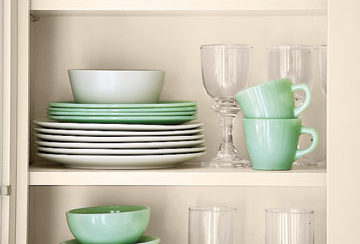
- Soap your sponge with the dish soap, and wash the plastics, rinsing with hot water, then put in drainer.
- This is also the time to finish the silverware!
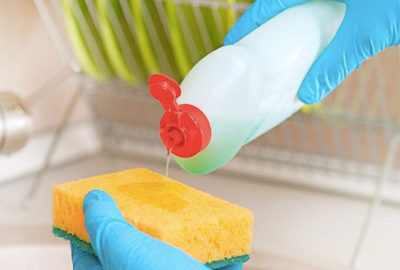

- Lastly, if there were any pots soaking, you are now ready to finish the washing.
- Dry pots & pans & put in cabinets.

- Take another short break and when you return to your “clean” dishes, go ahead & put the plastics & silverware away.

- Wipe off counters & stove top, refrigerator door handle & anything else with a smudge and enjoy a job well (and efficiently) done!

Being your own dishwasher can be a pain, but it’s amazing how some simple techniques like these can make a big difference!

What are your tips for washing dishes efficiently?






I also don’t use antibacterial soap to hand wash dishes but I do use vinegar in the rinse sink. I put my clean dishes sometimes inside the empty clean dishwasher to drip dry. We were taught to clean the least dirty dishes first and to save the dirtiest ones for last. That way you don’t have to make fresh dish water again.
Please log in or create a free account to comment.I’m a big fan of vinegar!
Please log in or create a free account to comment.I have been hand washing dishes most of my adult life, 30+ years. Our hard water here seems to “eat” dishwashers, making them only last a few years. At our house, plates and serving bowls are scraped (using a rubber scraper or dinner knife) after a meal and before stacking beside the sink. I prefer to wash the plastics first, as they seem to pick up any grease in the wash water washing them later . Starting with hot soapy water and a wash cloth, I wash plastic cups first then other plastics. Then I wash the glasses and mugs, then bowls and plates. (Sometimes it is necessary to use a brush or plastic “scubbie” to get stuck on particles off. I use ones that can be washed or soaked occasionally in bleach water.) Utensils are washed next, being allowed to soak a few minutes while sharp objects like knives are washed. Knives and sharp objects are never put down into the dish water to soak but are taken from the counter, washed, and rinsed without letting go of them. This way I don’t get a nasty surprise by grabbing a sharp edge and cutting myself. Lastly, I wash the serving bowls and then pots & pans. Sometimes it is necessary to empty the sink and to run fresh water to wash the serving bowls and pots & pans, if we have had company or have let the dishes collect for a few meals. I may have to run a new sink of rinse water a few times while washing dishes as I don’t like when it has bubbles or food particles in it. I’m going to try adding some vinegar to my rinse water to help with spotting after reading other comments. I like to let my dishes air dry after learning in nursing school that this is the most sanitary way to get them dry. I occasionally add bleach to a sink of water and soak my plastic cutting boards for 20 minutes or so, but don’t use bleach for standard dish washing. Everyone will have a different method that works for them.
Please log in or create a free account to comment.Great! Thanks for sharing, Shannon :-)
Please log in or create a free account to comment.We were taught in Home Ec class back in the dark ages to wash the glass ware first by itself. Then add the dishes then do the flatware and last do the pots and pans. This was back before the age of plastic dishes. I like to empty the sink after the silverware and start fresh to do the plastic then pots and pans. You should not be adding bleach to anything with ammonia as it causes fumes. And ditto the not using antibacterial soaps. Hot water and regular soap will kill germs.
Please log in or create a free account to comment.I use the germ collecting sponges everyone mentions and dislikes so much. The trick to keeping them from smelling and collecring germs is to throw the sponge in the microwave for about 2 mins so that the high heat quickly kills any germs and dries out the sponge. The germs come from a wet sponge sitting around taking forever to dry. We greatly extend the life of our sponges by doing this repeatedly.
Please log in or create a free account to comment.I have rarely had the luxury of a dishwasher so it have found tricks along the way to get it done. I agree that if you clean as you go that is the best way to stay on top of it. However, sometimes our busy lives don’t always allow for it. So when I do have a stack of dishes to tackle I also allow time for my dishes to soak. Definitely makes them easier to wash. I use the breaks to get other things in the kitchen cleaned up such as the appliances. One tip I would like to offer for cleaning your microwave ( I learned this trick back in my housekeeping days), take a wet washcloth and place in your microwave and run it for a minute at a time depending on how dirty it is. This will help to steam clean the the baked on food. Make sure to use your rubber gloves as it will be hot! Use the hot washcloth to wipe down the microwave. Rinse and repeat until clean. Works like a charm!
Please log in or create a free account to comment.No sponges. Just a clean washcloth each time dishes are cleaned. I have three different colors for washclothes. One that is used only in bathrooms. Then two different colors for kitchen. One for dishes and one color for tables, counters and wiping out sink and faucets after all the dishes are cleaned.
Please log in or create a free account to comment.That is a great method, Angel!
Please log in or create a free account to comment.Hey Jillee, I have nothing to offer on dishwashing, but I would like to say that I am sorry you are having a rough weekend and that I hope things are much better now! Sending you a virtual hug!!
Please log in or create a free account to comment.Thank you, Susan!
Please log in or create a free account to comment.I was taught to wash silverware first, because they go in your mouth, glasses next, because they touch your mouth, then plates, then pots and pans. I do wash pots and pans as I’m cooking, and start with fresh soap and water after eating.
Please log in or create a free account to comment.Antibacterial liquid soap contains triclosan. That ingredient is supposedly absorbed through the skin and accumulates in your body. It’s a suspected endocrine disrupter. While washing dishes, if you don’t use gloves, you will be absorbing it. If you don’t adequately rinse, you may be eating the residue on your dishes.
Please see the news reports about the FDA action against triclosan:
http://www.cnn.com/2013/12/16/health/fda-antibacterial/
The FDA is re-evaluating whether this and other common antibacterial in soaps are safe. This appears likely to be a step on the way to banning triclosan in soap eventually. There appears at this point to be NO EVIDENCE this ingredient makes these soaps more effective at disposing of germs either.
Please log in or create a free account to comment.I remember high school health class, and being told to put a small bar of soap in your first aid kit for wahing scraps and small wounds because it would kill bacteria. Please don’t use soap that says it is antibacterial. But I can recommend Dawn Platinum Power Clean. It does in 3-5 minutes what a overnite soak wont. I do use a few drops of bleach in my dishwater if someone is sick though. I worked in a pet grooming shop that was attached to a veternarian. He came in one day and smelled the bleach we had used to clean cages. He told us that you only needed to use a few drops per gallon to sterilize. If you can smell the bleach your using too much! I also do plastic and glasses first so they have least contact with any grease in the water.
Please log in or create a free account to comment.I love hand washing dishes. For many years I did not own a dishwasher (or a washing machine/dryer) so I didn’t always love it. Perhaps it has to do with choice! My method.
Please log in or create a free account to comment.BEFORE I cook or bake I fill my sink with hot soapy water. As I work I put dirty items in the sink. I save knives and really gunky stuff for later.
WHILE my dish is simmering or baking I wash the dishes and then rinse them and place them in the drainer. I then RINSE the dirtier dishes* and put them aside. I n a new sink of hot soapy water. I add BAKING SODA & VINEGAR and carefully wash my knives and cutting boards with a CLOTH. AFTER THIS I add my rinsed but still dirty pots. I always wear rubber gloves and find the ones with ridges help in getting the pots and pans clean. I dry and put away whatever I can and then I put my pots and pans on the drainboard. FINALLY AFTER a meal we end up just having plates, glasses and utensils to do. Hot, soapy (DAWN) water, vinegar, a little baking soda are all you need!
*If something is really greasy I use pieces of newspaper to wipe them out before rinsing.
Newspaper is a great idea!
Please log in or create a free account to comment.Back when I was in 7th grade….a long, long time ago….we had a class known as home ec (home economics)….our teacher, Mrs. Weaver, taught us how to wash dishes….I was amazed that there was actually a formula for doing them! I am on my way out of my 50s, never had a dishwasher that wasn’t attached to my arms, and I have to agree with one comment above….get it done! LOL Thanks for posting this….brought back memories!
Please log in or create a free account to comment.Dianne
If you have hard water add a tablespoon or two of baking soda to the rinse water. This will help break down any residue left from the wash water. One of the reasons you’re left with spotty dishes.
This article brought back memories of our kitchen reno. I washed dishes in the bath tub for 6 months!!
Please log in or create a free account to comment.Thanks for the tip, Patti!
Please log in or create a free account to comment.I take a microfiber cloth, cut it into quarters, and use the smaller cloths to do my dishes. They clean the dishes well and I throw them into the wash after each use. I keep a big stack in the drawer next to the sink and always have a fresh piece of microfiber for small jobs.
Please log in or create a free account to comment.That’s a great way to save money :-)
Please log in or create a free account to comment.I’m probably weird because I do have a dish washer that I have never used in the 9 years I have lived here. I was always taught that you wash the items that go in your mouth first – silverware, then glasses, the what your food is eaten off of – plates and bowls, next is what the food was served from and last are the pots and pans the food was cooked in. The idea is that the water is cleaner at the beginning of the washing then it is at the end…and the pots and pans will get heated up with the food so anything not washed off will be killed in the heating process. I love the idea of using vinegar in my wash water! Air drying everything is the most sanitary method of drying dishes. And yes, I would really rather do the dishes myself – no one else can stack the dishes in the drainer like I can!!
Please log in or create a free account to comment.Really? Is there really anyone who needs the guide to washing dishes by hand ? :-)
Please log in or create a free account to comment.Kate, yes. My husband.
Please log in or create a free account to comment.Where can I hire that lady to do my dishes?
Please log in or create a free account to comment.I Thank God I don’t have a dishwasher and my kitchen is really small , to me dishwashers take too much time and they do run your electric bill up!
Please log in or create a free account to comment.I wash as I’m making my meals and clean my kitchen in the morning after kids go to school and at night after supper and I don’t have so much to do.
, I put in vinegar and baking soda to give it that extra scrubbing power on dishes or use a Sos scrubbing pad or Brillo pad for my pots and pans . I don’t see nothing wrong with bleach every now and than. We have to use it when we are washing big pots and pans and grills in the concession stand at our local high school.
So, I live in a 3rd world country and I do not have a dishwasher (or a dryer for my clothes!) I don’t even have hot water in the sink to cut grease.
I use one of these dish wands :http://www.amazon.com/3M-650-12-Scotch-Brite-Heavy-Dishwand/dp/B00450LLYA/ref=sr_1_1?ie=UTF8&qid=1410699249&sr=8-1&keywords=dish+wand
And keep it filled with Dawn that cuts grease in cold water. (This is the only “chemical” that I have in my house as I am toxic chemical free in everything else)
But, I cannot fathom having stacks of dirty dishes in my sink. Seriously it would freak me out. I just clean as I go. Sure, I am doing dishes 10 times per day, but while I wait for the water to heat up for my hot cacao (bullet proof coffee substitute) I can do all the dishes that need to be done, plus prep the ingredients. (here is that recipe — it is SO healthy and yummy! http://blog.purifyyourbody.com/2014/07/bulletproof-hot-cacao-recipe-healthy.html)
What I hate is when I have a pan soaking that I used for something greasy, like sausage…. and my husband puts cups, dishes, glasses, bowls etc IN it, making the bottoms of those dishes greasy (making it extra work for me).
Grr. I can’t wait to move back to the states and have a dishwasher, or hot water even!
But, we have a housecleaner once a week that would do all the dishes if I left them for her…. She is here from 8am to 3pm and costs only $10 TOTAL, and she works HARD…. So, I am very lucky on that count.
Please log in or create a free account to comment.I have to bring this up. In Finland there is a astiankuivauskaappi (A DISH RACK INSIDE THE CUPBOARD) in every kitchen, even the smallest ones.
Instead of dedicating surface or sink area to drying dishes, it makes shelves serve a secondary purpose and lets you skip a step entirely.
http://www.4jtrading.com.au/product-overview.html
https://www.facebook.com/groups/Tiskikaappi/
Please log in or create a free account to comment.That’s amazing!
Please log in or create a free account to comment.And don’t forget the baking soda trick on your cookware & bakeware: moisten the item that needs some TLC cleaning and sprinkle with baking soda – let it sit (sometimes overnight) and it should come clean with very little elbow grease (scrubbing). This will also help keep the outside of your cookware & bakeware looking great! I recycled a couple of name brand coffee creamer containers by removing the labels and keeping baking soda in them. I keep one under my kitchen sink and one in with my cleaning supplies!
Please log in or create a free account to comment.Sandra, that is brilliant. Never thought of soaking with baking soda.
Please log in or create a free account to comment.Is this serious? I actually like to wash dishes but it would take all day doing it this way.! They are dishes not toxic waste!
Please log in or create a free account to comment.The dishes, cutlery and pots and pans should be rinsed off first before washing.
The glassware should all be washed first; then the plates; then cutlery then pots and pans. This is to ensure that the glasses come out sparkling clean and the cutlery doesn’t jab your hands/gloves.
Please log in or create a free account to comment.Also your article talks about using antibacterial dish soap and bleach. I would ditch the antibacterial dish soap and be very careful about the amount of bleach if using it at all. One is overriding the other not to mention you are not giving your body a chance to naturally learn to fight diseases.
So, unless someone has a contagious disease, I wouldn’t use either. Perhaps a spoonful of white vinegar but that is it.
Do not waste water when rinsing. Have a separate washbasin full of hot water and change it when needed.
Wash first glassware & silverware, those will touch your mouth!
We don’t have a dishwasher at our cabin and I make sure, that everybody will pre wash their dishes. I just fill the sink with water and add some soap, after you have done eating pre washing is easy to do with a dish brush.
Please log in or create a free account to comment.Many years ago, in my other life as I like to call it, a woman who worked in a school cafeteria gave me some simple pointers that I still follow. She said always put your silverware in the bottom of your hot soapy water, then your other dishes and lastly your glassware. Pots are usually set aside soaking. She said you always wash your glasses first, something to do with less germs I think, then everything else but the silverware and pots. Silverware is last(except for pots and pans) because it needs to soak longer. Lastly, pots and pans and sometimes mine get to soak in the dishwater for a bit and I come back to them. Sometimes if you have a ton of dishes, you can’t fit it all in the sink anyway, but you still put the silverware in the bottom and then go from there, glasses first, etc. I don’t have a dishwasher, so all my dishes are done by hand. I always rinsed my dishes in the hottest water I could stand but I read somewhere that actually rinsing in cold water is better because it cuts the soap better than hot. Just a thought there. I think it’s like my friend says, “different strokes for different folks.”
Please log in or create a free account to comment.” I read somewhere that actually rinsing in cold water is better because it cuts the soap better than hot. “”
This applies to dishes which messes come from milk, eggs and starchy foods.
Please log in or create a free account to comment.Glasses are done first because grease tends to stick to it and show up as a foggy finish or as spots. Plastic will hold onto grease and feel slimy, but if you rub it well with a soapy dishcloth, it will all come off. After I do the glassware and plastics, i add the silverware and dishes to the sink.
I make (crochet) dishcloths out of acrylic yarn. Used to do it from cotton but found that cotton is too soft. Acrylic scrubs and works better than those sponges with the net over them.
Please log in or create a free account to comment.Interesting! I haven’t heard about rinsing with cold water, I’ll have to try it!
Please log in or create a free account to comment.When a friend had an annual celebration, I’d always help her with the dishes, a relative got to the sink first and rinsed everything in cold water, but they took so much time to dry the cold dishes. I prefer to rinse in hot water and drying is a breeze.