Never Buy Goo Gone Again — This Natural Fix Works Better

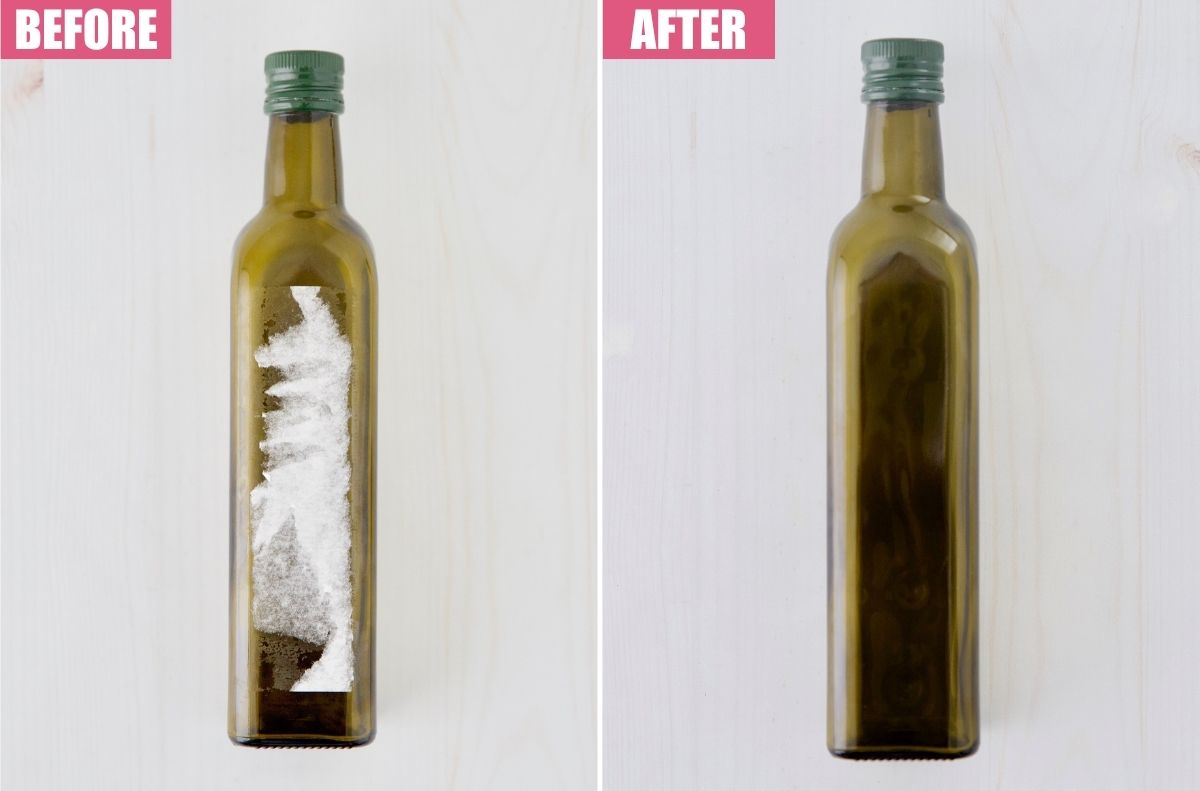
Split image of a bottle showing a cloudy, sediment-filled bottle labeled “before” and a clear bottle labeled “after” against a light background, illustrating the effectiveness of DIY Goo Gone.

I recently installed a new set of hinges on my front door. It’s usually a simple process that starts with pulling the pin out of each hinge so you can screw the two halves onto the door and the frame. Sometimes the pins slide right out, and sometimes they need a whack with a pin punch and a hammer.

Well, these particular pins just wouldn’t budge! My husband and I spent a good hour pushing and pulling on them before we finally got them out.

That’s when we saw why. Every pin was coated in a thick, sticky substance, and there was no way they’d go back into the hinges until that residue was gone.

I was curious if any other customers had dealt with the same problem, so I checked the product reviews. One reviewer called the coating “a VERY sticky glue on the hinge pin” and wrote, “Neither denatured alcohol nor acetone will remove the adhesive. Only Goo Gone will dissolve it.”

I didn’t have any Goo Gone on hand, so I was about to grab my keys and head to the store when I remembered a tip I’d shared on the blog years ago: lemon essential oil removes sticker residue.

After more than 15 years of blogging and thousands of tips, I’ll admit a few of them slip my mind now and then. Even the good ones!

I wasn’t sure plain lemon oil could handle residue that had stood up to acetone, but it was worth a try. I rubbed a few drops over each pin and let them sit for a few minutes. Then I wiped them with a paper towel, and the residue came right off! A little Dawn washed off the oil, and once I dried the pins with a microfiber towel, they slid right back into the hinges.

Since then, lemon oil has become my go-to sticky residue remover. It’s perfect for those dreaded HomeGoods price stickers that always end up right in the middle of the glass on a picture frame. You know the ones! And when I organized my garage recently, it made quick work of all the stickers on my new storage boxes.

If you’ve been reading OGT for a while, you might know lemon oil as my secret weapon for set-in laundry stains. It’s just as handy for sticky messes! So today I’m sharing why it works so well, how to use it, and an easy paste version for bigger jobs.
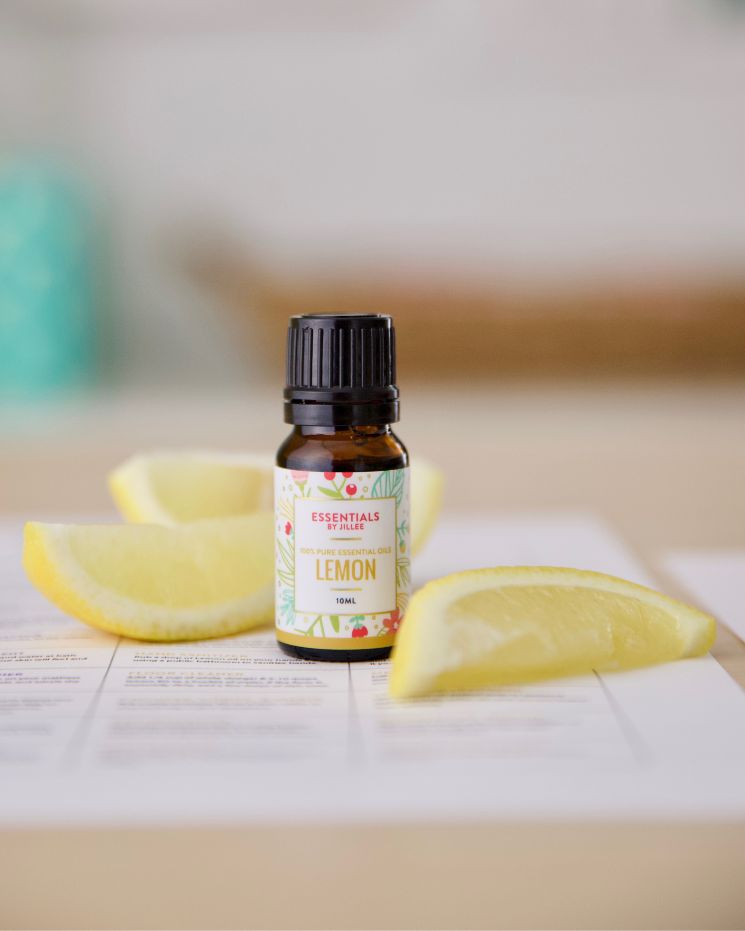
A small bottle labeled “Lemon Essential Oil” is placed on paper, surrounded by three lemon wedges on a light-colored surface—perfect for creating your own DIY goo gone solution.

Why Lemon Oil Works So Well on Sticky Residue

Lemon essential oil is the concentrated oil pressed from lemon peels, and most of it is made up of a natural solvent called d-limonene.

D-limonene works thanks to a concept you might remember from science class: like dissolves like. Most sticker and tape adhesives are made from rubbery materials that repel water, which is why soap and water just smear the residue around. Like the adhesive, d-limonene repels water, so it can dissolve what soap and water can’t.

That also explains my hinge pins. Acetone and alcohol are good at dissolving some kinds of residue, just not the thick, gummy kind that was coating those pins.

Goo Gone contains d-limonene too, along with a little orange oil, which gives it that citrus scent. But according to its safety data sheet, those citrus ingredients make up less than 10% of the formula. The rest is mostly petroleum solvent.

For me, the biggest reason to reach for lemon oil is how versatile it is. I use it all over the house, so I don’t need a separate bottle of adhesive remover taking up space under the sink. And the fresh lemon scent is a nice bonus!

How to Use Lemon Oil to Remove Sticker Residue

There are two ways I use lemon oil for sticky messes: straight from the bottle, or mixed into a simple paste. Plain lemon oil handles most everyday jobs, and the paste is better for big, thick messes that need some scrubbing.
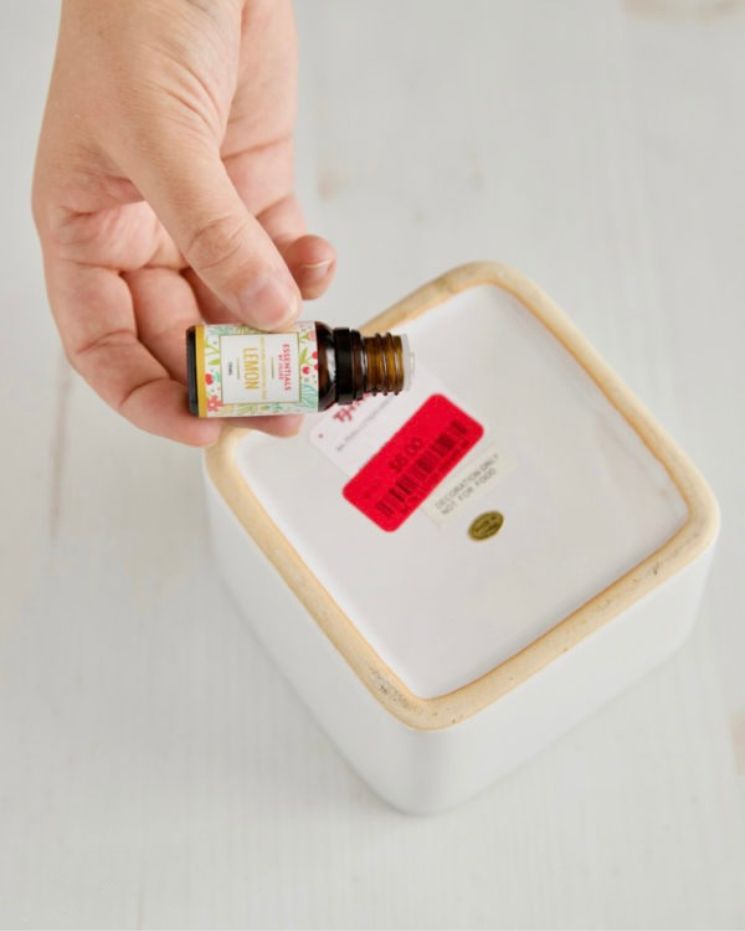
A hand holds a small essential oil bottle over a white ceramic container with a red price sticker on the bottom, perfect for creating your own DIY goo gone to easily remove sticky residue.

Method 1: Plain Lemon Oil

This is the method I use most often. It’s perfect for price tags, small labels, tape residue, and tough, gummy gunk like the stuff on my hinge pins. Since there’s no grit, it’s also the better choice for glossy surfaces that scratch easily.

  1. Peel off whatever comes off easily. If it’s a thin sticker like a price tag, you can skip this step, since the lemon oil will soak right through the paper.
  2. Put a few drops of lemon oil right on the residue, and let it sit for a few minutes.
  3. Rub the residue away with your fingertip or a paper towel. For stubborn spots, scrape gently with your fingernail or an old gift card.
  4. Wash the item with dish soap and warm water to remove the oily film. This is especially important for anything that touches food.
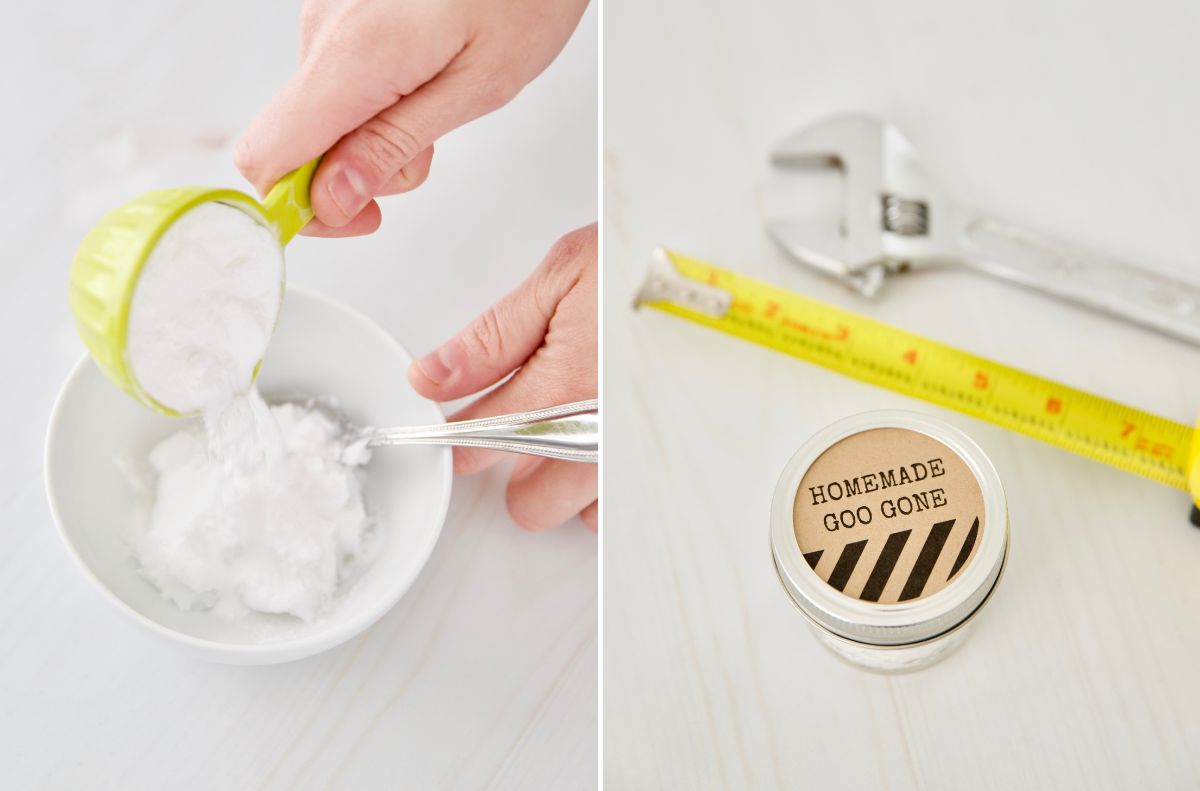
A person pours white powder into a bowl; next to it, a jar labeled “Homemade Goo Gone” sits beside a wrench and measuring tape on a white surface, showcasing a simple DIY goo gone solution ready for your toughest cleaning tasks.

Method 2: My DIY Goo Gone Paste

For bigger messes, like a jar label that leaves behind a layer of paper and glue, I use my homemade Goo Gone paste. It stays put on surfaces where plain oil would drip off, and the baking soda adds some grit for scrubbing.

Ingredients:

Directions:

  1. Stir the baking soda, coconut oil, and lemon oil together in a small bowl. If your coconut oil is solid, warm it slightly first so it’s easier to stir.
  2. Peel off as much of the label as you can.
  3. Smear a generous amount of the paste over the residue, and let it sit for about 15 minutes.
  4. Scrub away the loosened gunk with a scrubber.
  5. Wash the item with dish soap and warm water to remove the oily film.

For a bigger batch, use 1/3 cup each of baking soda and coconut oil and 25 drops of lemon oil. Store the extra in a jar with a lid.

Jillee’s Take:

When I cook with coconut oil or apply it topically, I always buy high-quality virgin coconut oil. But for cleaning applications like this, I have no qualms about using the cheap stuff to save money!
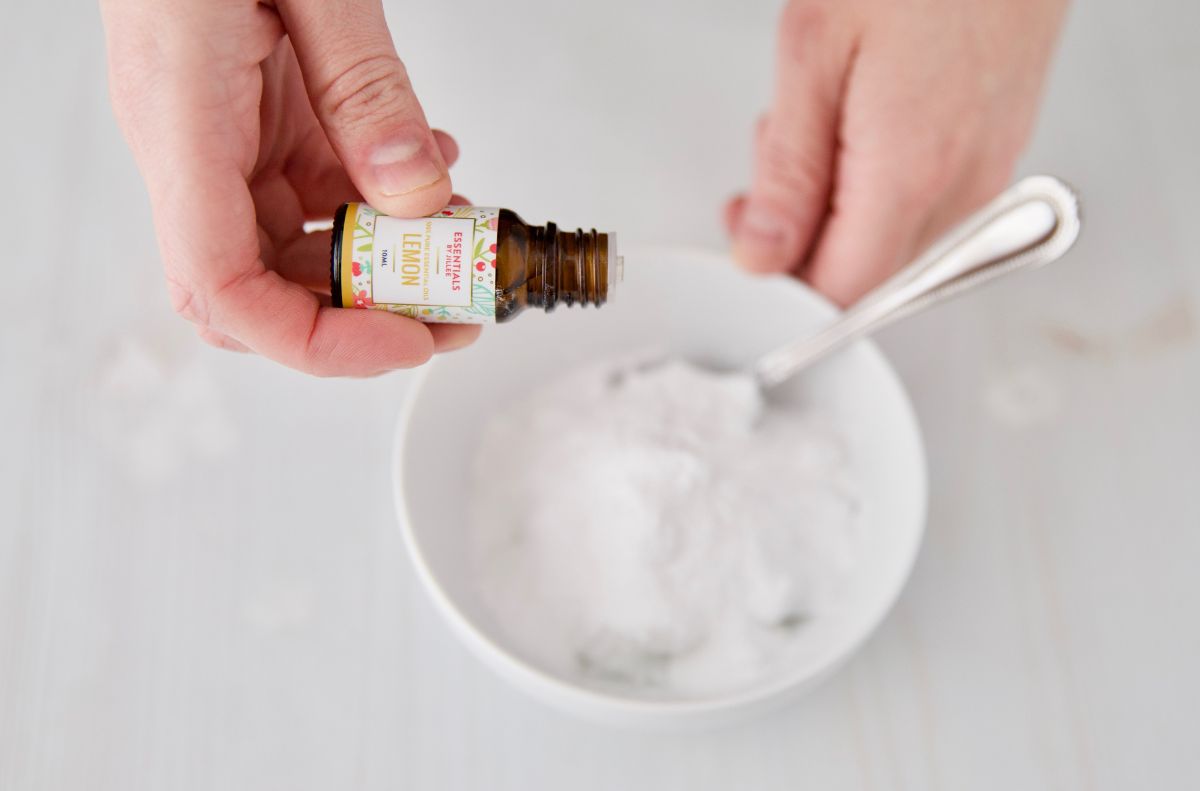
A person pours lemon essential oil from a small bottle into a white bowl filled with baking soda, holding a spoon in the bowl to create a homemade DIY goo gone solution.

What Lemon Oil Works on (and What to Skip)

Lemon oil works best on hard, nonporous surfaces like glass, ceramic, metal, and most hard plastics. Here’s what it’s great for, and where to skip it.

Use it on:

  • Sticker adhesive and price tags on jars, mugs, vases, dishes, water bottles, and picture frames
  • Tape residue and leftover label gunk on containers you’re reusing
  • Tree sap, gum, and tar
  • Scissor blades gummed up with tape
  • Wax drips on glass candleholders
  • Sticky grime on tools and hardware

Skip it (or test a hidden spot first):

  • Styrofoam and clear acrylic, which d-limonene can melt or cloud
  • Painted, varnished, or lacquered finishes, including walls, wood furniture, and car paint
  • Porous surfaces like unfinished wood, marble and other natural stone, paper, and cardboard, which can soak up the oil and end up stained
  • Leather, suede, silk, and rubber
  • Eyeglasses and phone screens, which have delicate coatings
  • Super glue, which comes off better with acetone
  • School glue, which washes off with warm water

A Few Safety Tips

Lemon oil is plant-based, but it’s still a strong solvent, so a little care goes a long way.

  • Wash your hands when you’re done. Lemon oil can irritate skin, so wear gloves for bigger jobs. It can also make skin more sensitive to sunlight, so wash up before heading outside.
  • Keep the cap on tight. Citrus oils break down faster than most essential oils, and old oil is more likely to irritate skin. Store it somewhere cool, and try to use it within a year of opening.
  • Watch out for open flames. It’s flammable, so don’t use it near a lit candle or a gas burner.
  • Be mindful of pets, especially cats. Cats are very sensitive to citrus oils, so open a window and don’t leave oily paper towels lying around.
  • Store it out of reach of children. Like any solvent, it’s dangerous if swallowed.
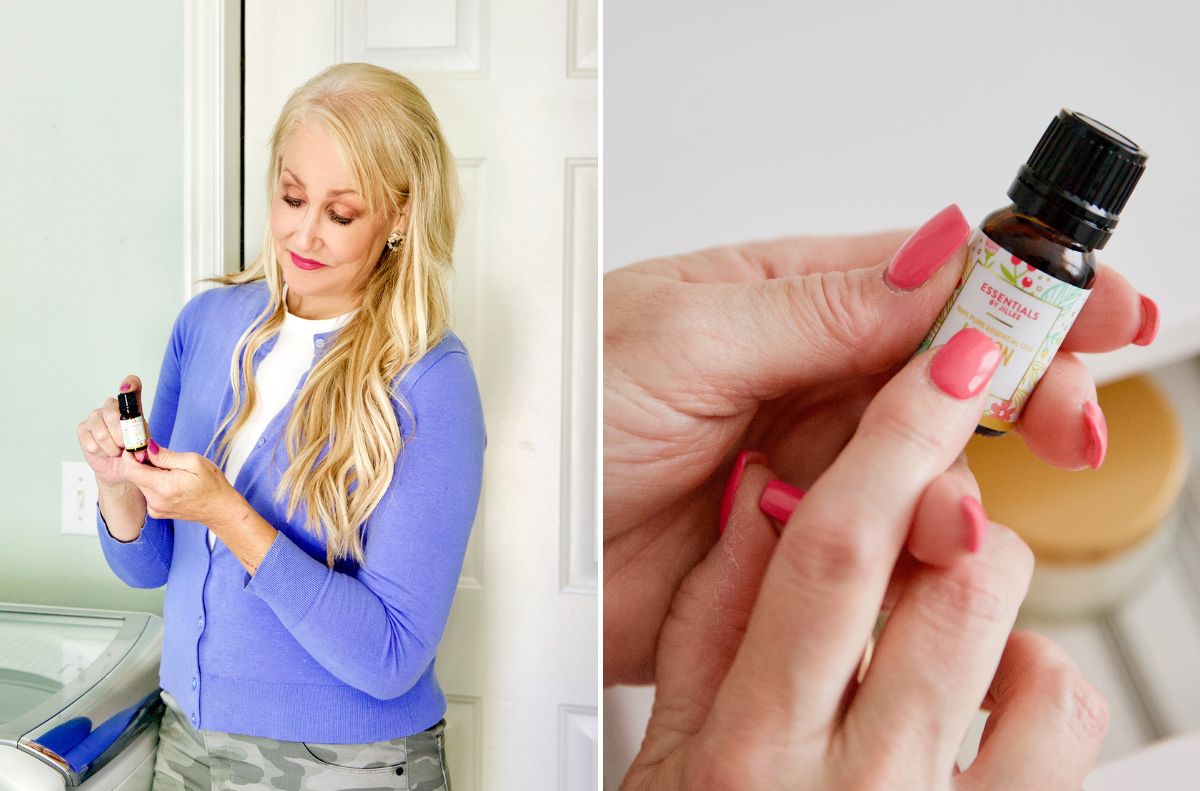
A woman in a blue cardigan examines a small bottle. Close-up of hands holding and reading the label on an essential oil bottle, perhaps considering its use in making DIY goo gone.

Say Goodbye to Sticker Goo for Good

If you’re tired of fighting with price tag residue, tape gunk, and labels that leave a sticky layer behind, lemon essential oil might be exactly what you’ve been looking for.

Right now is an especially good time to give it a try: it’s 30% off during my “Clear the Cobwebs” Fall Cleaning Sale (40% off for OGT Plus members).

It also comes in a bigger bottle now—15 ml instead of 10 ml. Since a few drops take care of most sticky messes, one bottle goes a long way, with plenty left over for set-in laundry stains and other jobs around the house.

Lemon oil is backed by my money-back guarantee, like everything in my shop. If it doesn’t live up to your expectations, just reach out within 90 days for a full refund, no questions asked. So there’s absolutely no risk in trying it out!

Here’s to goo-free jars, picture frames, and hinge pins!

What’s your go-to sticker remover?

NEW! Can you guess the 5-letter word related to today’s post?

Read This Next


Jill Nystul Photo

Jill Nystul (aka Jillee)

Jill Nystul is an accomplished writer and author who founded the blog One Good Thing by Jillee in 2011. With over 30 years of experience in homemaking, she has become a trusted resource for contemporary homemakers by offering practical solutions to everyday household challenges.I share creative homemaking and lifestyle solutions that make your life easier and more enjoyable!

About Jillee

Jill Nystul

Jill’s 30 years of homemaking experience, make her the trusted source for practical household solutions.

About Jillee

MORE IDEAS FROM

Bright Ideas

Leave a Comment

69 Comments

  1. Would the recipe baking soda, coconut oil, lemon essential oil work on 14-year-old laminate wood kitchen cabinets? I’m most afraid of trying random products because it might take the laminate off!!

    Please log in or create a free account to comment.
  2. If the sticker to be removed is on a jar, I fill it with really hot water. For others I use a hair dryer, and they come right off. I still use goo be gone when a little of the sticky remains.

    Please log in or create a free account to comment.
  3. Does this work on Rx bottles? How can I remove film that completely covers a plastic car visor? Thank you for always being there to help.

    Please log in or create a free account to comment.
    • From the high-VOC commercial field, I use adhesive remover made by the Duck Tape people. It is probably mostly kerosene, but most adhesives rub off with a tissue after it sits for a moment. It has a fiber applicator, and the lid has a sturdy scraper to push a wad of sticky stuff off a surface. I use it frequently, but I understand that it is smart to also use good ventilation.

      Please log in or create a free account to comment.
  4. Hi Jillee, would this also work to remove melted or worn bumper stops on cupboard/cabinet doors

    Please log in or create a free account to comment.
  5. A MUCH easier solution to removing labels on bottles is simply putting oxi-clean into a bucket or bin of water and let the bottles soak to a day or three. I keep a separate bucket with lid in my laundry room just for this purpose. If a label is extra tough, as some are, use a plastic razor blade to get the excess off.

    Please log in or create a free account to comment.
  6. I thought I might be able to use this but realize it’s not for the mess I have. I have a glass baking pan I burned ribs and sauce in. The black residue is hard as a rock. I think I will have to throw away the pan. PS the ribs were good, though!

    Please log in or create a free account to comment.
    • Put the baking pan on stove. Pour half a cup of baking soda and 2 cups of water in and boil over the stove. Let it cool overnight. The burnt residue should scrub off easy after this treatment.

      Please log in or create a free account to comment.
  7. Instead of a metal scratcher use a plastic scraper for pans like the one you get with Pampered Chef baking pans. I use my plastic pan scraper on everything and this is one example of what I use it for!!

    Please log in or create a free account to comment.
  8. How can I print the written words and NOT the photos?

    Please log in or create a free account to comment.
    • Use the print friendly app. There’s a icon on the pictures. You can reduce it to 25 percent . It works for me .

      Please log in or create a free account to comment.
  9. hi Jillee. I have lots of bottles with really tough stickers to remove and have tried to do so without any success. After using your goo gone gunk remover, my bottles are spotless! Even my husband think it works like a miracle! I never will use anything else. thanks again for this great recipe.

    Please log in or create a free account to comment.
    • I have the best luck with Avon Skin So Soft! I soak them in a small amount. Make sure the edge of the label sits in SSS, let it soak for several days rolling it around in SSS. See if you can start to peel label off . If not let sit longer. it will get easier the longer it sits. Usually takes most of the words will disappear.

      Please log in or create a free account to comment.
      • I forgot to say I use this on prescription bottles.

  10. I just tried the goo gunk gone remover today, and, (not that I doubted it), but it really works! I had put DIY labels on some plastic food containers, and the labels would-not-budge. So, I lathered them with the coconut oil and baking soda mixture, let them sit (for a good 30 minutes) and then rinsed the goo right off with just a little scrubbing. Awesome!

    Please log in or create a free account to comment.
  11. To Cherie Stevens- If you belong to Costco, you can get Organic Virgin Coconut Oil for a great price and it’s excellent quality. Might save you some money. Kudos to you for rescueing the Grey’s. We had 2 and they were wonderful pets and companions! You’re right though, their teeth are horrible!!!!

    Tess S.

    Please log in or create a free account to comment.
  12. This method totally works! I did it yesterday with some old, VERY sticky jars, and now they’re sparkly and lovely. Thanks, Team Jillee!

    Please log in or create a free account to comment.
  13. Just use your blow dryer. Get a corner of the sticker up using your nails and use the blow dryer to get under the sticker. It will come right off.
    If there is still some residue, grab your scrubby and get it damp, not wet. Heat, scrub, repeat as needed. Finally wipe off with cotton or microfiber towel.
    You don’t need chemicals. Just heat.

    Please log in or create a free account to comment.
  14. You did a post once before on using peanut butter to get the label gunk off of the jars. Works like a charm. I keep the jar of used up peanut butter and scrape out what’s left for my jars. I let them sit for a bit and wash them off. Works great!

    Please log in or create a free account to comment.
  15. I use W-10-40 for any tar,grease oily stains on clothes,carpeting furniture,floors, & also for sticky labels, crayon marks.I had tar on my carpet & nothing removed it,so I left it there, A shampoo man came in & sprayed W-D-40 on that & other stains & it came out completely

    Please log in or create a free account to comment.
  16. I found just putting a drop of melaleuca oil right on to the sticker residue and rubbing it in works just as well.

    Please log in or create a free account to comment.
  17. Thanks for the ideas. I have so many jars that have partially removed labels. I will try some of them. I’ve thought about filling the sink 50/50 with vinegar and water and letting the jars soak. A solution of vinegar and water worked great for removing wallpaper.

    My question for y’all is how do you get the smell out of the lids?

    thanks, Beth

    Please log in or create a free account to comment.
  18. I just use the peroxide/baking soda mixture and scrub it off with my fingers. Works every time, no waiting. That is the best mixture EVER! Works for everything-ceramic stove top (I usually spray some orange or lemon vinegar on there first then scrub) gunky labels, greasy baking pans, counter tops, unknown floor glop, on and on. I love this mixture! Love your finds, Jillee. Keep them coming…

    Please log in or create a free account to comment.
  19. Hi Jillee, I have a huge project. On the front of our motorhome we had a plastic protective film that failed. We have peeled off some of the plastic but it has left behind the glue. We also have to be careful of the paint underneath the glue. It is a huge mess and looks awful but we are afraid to use something too strong because of the paint. I am hoping maybe someone out there knows how to remove this glue.

    They (the people whose protective film failed) gave us a quote to remove the film (but won’t guarantee the paint underneath). The quote $3000.00!!

    Thanks Jillee love your blog.

    Please log in or create a free account to comment.
  20. If you put really hot water inside the container, do not get water on the sicker it comes off with no sticky mess.

    Please log in or create a free account to comment.
  21. I have baking soda, washing soda and vinegar, recently peroxide. That covers at least 90% of my cleaning needs, because I seem to be too lazy to make my own dishwasher stuff. This is mostly due to your (and readers) amazing tips and DYIs. Never never never retire please. Love you all!!!

    Please log in or create a free account to comment.
  22. A little bit of peanut butter will remove sticker goo from glass jars. Also works great on gum in hair.

    Please log in or create a free account to comment.
  23. I just don’t get what the big deal is. I upcycle everything I can and recycle the rest. I put the container in the DW and run it with the load–that usually gets most of the stuff off. If it doesn’t, then the item goes to the recycle can–I have lots of others to try; its just not worth my time.

    All my cleaners/remedies are DIY, except for dishwasher detergent. The DIY recipe etched all the red lines off the measuring cups. I had to buy a new fleet, very expensive and some are hard to find (I cook/bake way more than the average bear). So I decided that the DW tabs are a necessary evil–I do cut them in half though. I still save a little and delay the destruction of the Earth a bit.

    Please log in or create a free account to comment.
    • I understand what you’re saying. I tend to agree. It really isn’t a big deal if a sticker/label doesn’t come off a jar that is recyclable anyway. It’s not like there aren’t going to be 5 more jars next week to decide whether to keep or recycle. I think what’s going on here though is that a lot of us, myself included, become stubbornly determined to find methods to remove gunk from whatever object we deem worthy of re-use for whatever reason. I’ve become amused at my own efforts to try DIY solutions, especially when some part of my brain is saying, “Really?” “You’ve been at this for 30 minutes now…let it go!”

      Please log in or create a free account to comment.
  24. I don’t know how natural it is, even though I read it is made from a fish oil derivative, but I have the most success with WD-40 removing stickers. I even had a pair of quality leather shoes I purchased on sale-they had a sticker inside each one which had seen better days and broke apart as I tried to remove them. I used a little WD-40, waited about 20 seconds. the stickers peeled right off. I used a cotton swab with WD-40 to remove any sticker residue. It didn’t leave a stain on the leather lining. Since it comes in a felt-tip pen form these days, it’s easy to buy just a little to have on hand for stickers instead of having to buy a whole can, even though it does have many uses.

    Please log in or create a free account to comment.
  25. I have a question….did you try the coconut oil mix on the same bottle that you tired the other two mixes?

    Please log in or create a free account to comment.
  26. Will certainly try this mixture for sticky labels.

    I use the coconut oil + baking soda mixture (2-parts oil to 1-part baking soda) as a toothpaste for my beloved elderly greyhounds; I found this recipe online at a pet-rescue site. Wish I had known about this years ago, since both my greys had miserable, awful teeth when I adopted them (I am sure they do not brush their teeth at the racetrack!). I have been using this toothpaste mixture for about two months now, and their teeth are cleaner and brighter than they have ever been.

    I buy the most awesome coconut oil from VITACOST–54 ounces of food-grade coconut oil for $22. It smells divine, too. (http://www.vitacost.com). Great for skin, cooking, doggie tooth-paste, etc.

    I love DYI and will never go back to store-bought clothes detergent again. Also love, love Jillee’s dusting spray and use it all the time on wood furniture and our leather couches.

    Please log in or create a free account to comment.
  27. I haven’t tried any of these things for clothes, etc., but to get the sticky stuff off glass bottles I simply use lemon essential oil. You don’t have to let it sit. Just put a small amount of lemon EO on a rag and the goo comes off immediately.

    Please log in or create a free account to comment.
    • I use undiluted lemon essential oil to clean goo off of glass as well! It works!!

      Please log in or create a free account to comment.
  28. I have tried Goo Gone and various other DIY methods without a whole lot of success till a couple of days ago. I don’t have coconut oil on hand but am sure it works as most oils seem to. The mixture I found is using 1/3 each of any oil (I used canola), baking soda and rubbing alcohol. I was told it needs to be mixed fresh-worked fabulous on plastic mixed nuts jars. And to get the label itself off? Hair dryer! In less than a minute had the label off, then applied this mix for a while then rubbed it off-tada! Success!! Thanks for all your great hints-this is just a variation of it!

    Please log in or create a free account to comment.
      • Jillee I couldn’t believe how well it worked! I was pretty skeptical about it-but with those particular labels it worked great!

  29. I wonder if it’s the saturated fat (oil) or the coconut that makes it work. It might be worth trying with the old-fashioned shortening we all grew up with for those who say the coconut oil is too expensive.
    I agree that usually good old soap and water work on most labels but there are few sticky wickets out there.
    Thanks for such good ideas.
    Jan

    Please log in or create a free account to comment.
  30. I find that if you (a) take the jars out of a hot dishwasher or (b) put the jars in very warm water for about 10-15 minutes first, the oil and baking soda works. You may have to do it a few times but depending on the jar, it is worth the work. I’ll try the coconut oil and baking soda though. It might work better. Thanks, Jillee, for all your tips. I tried many of them and most of them work well. I especially love your laundry detergent. I haven’t bought regular detergent in quite some time. Keep the tips coming. I love both saving money and using natural products.

    Please log in or create a free account to comment.
  31. Have tea tree oil on hand. Can I substitute it for the malaleuca oil?

    Please log in or create a free account to comment.
    • Yes – it’s basically the same … you can Google it.

      Please log in or create a free account to comment.
  32. Hi Ya’ll,

    On glass bottles I use a few drops of whatever liquid dish soap is at my sink & my favourite secret: Mr Clean Magic Eraser. Even the no frills version works.

    HTH

    Please log in or create a free account to comment.
  33. De-Solv-It. is a non-toxic purchased product made of orange oils which is good for removing new adhesive labels. I’ve found it at Ace Hardware and, I believe, at Walmart.

    To remove old, dried-on adhesive labels from thrift store finds, I’ve used peroxide, baking soda, and Dr. Bronner’s Sal Suds mixed into a paste. I liberally cover the old adhesive with the paste and leave it for several hours. Usually the old adhesive comes off with just a little scrubbing with an old tooth-brush.

    Please log in or create a free account to comment.
  34. Skin so Soft by Avon works very well for many, many things – including label removal. It’s basically a light oil, so I guess almost any oil would work.

    Please log in or create a free account to comment.
    • another great use for skin so soft is as a bug repellent. I LOVE, LOVE , LOVE IT. Smells good too…………..

      Please log in or create a free account to comment.
      • I have used the Skin-So-Soft method as a mosquito repellent and found it works okay but the strong smell makes me feel sick, it’s too strong! Makes my head ache just thinking of it!!!!!!!!!!!!!!

  35. I just let jars and cans sit in my dishwater for the duration when I wash dishes. I use Dawn Dish Soap with the bleach alternative. If the sticker and it’s glue need a little extra help, I take my metal scrubber to it. But I’ve never really had a problem with labels really sticking on after a little soaking in Dawn. Coconut oil is expensive when it’s the pure kind. I would hate to waste it on something such as this. Great post though, Jillee! Thanks.

    Please log in or create a free account to comment.
    • Good tips Heather! You’ll notice there is a note at the end of the end of the post about using cheaper coconut oil for cleaning products so you don’t have to waste the expensive stuff :)

      Please log in or create a free account to comment.
  36. I have used just a little dab of cooking oil or whatever oil I have on hand with
    Some success. I just use a little on a paper towel and scrub away. I love the
    Homemade Goo-Gone as I’m on a tight budget and try to be frugal.

    Please log in or create a free account to comment.
  37. Thank you for this. I like to save glass bottles for storing and normally used dish detergent with a lot of scrubbing to remove the goo; most often without success.

    Please log in or create a free account to comment.
    • Just use a cloth dampened with white spirit, it will remove all the goo (aka adhesive). White spirit (methylated spirits) is flammable so be careful.

      Please log in or create a free account to comment.
      • I read about, and have success with, using spray oil (as in for your bakeware). I spray a little on, scrub a bit, spray a bit more wipe it clean. It takes very little effort, I have spray oil on hand and it works. It seems to work better when the bottle had been soaking in water so I try to do this right after I remove the label by soaking in dishwater. Hot/cold water doesn’t matter, just so long as it is wet.

  38. Unless I have the ingredients on hand, I refuse to try anymore of these DIY recipes as I have found that most of them do not work as well as the real stuff! I can see that for those of you with allergies, and for very commendable environmental concerns, you don’t mind spending the extra time and money on these suggestions. Have used baking soda for years in the refrigerator and most recently in a newly purchased used freezer to remove odors, so that is probably one of my favorite DIY tips. Another excellent one is for a pliable ice pack. Simply mix some rubbing alcohol with water in a heavy duty ziploc baggie and store in your freezer. Use over and over! I have a good supply of washing soda, 20 Muleteam Borax, etc. on hand from other failed attempts at various suggestions, but they will eventually get used up. Just won’t buy into anymore of these methods!

    Please log in or create a free account to comment.
    • What specific non-toxic cleaning solutions did not work for you? Obviously not all of the non-toxic cleaning solutions work for every situation. But, some of them actually work better than “the real stuff”. I think that specific details of what did and didn’t work for you would add important details to the discussion. A wholesale dismissal of the efforts of Jillee and other bloggers to help people find less toxic, less expensive cleaning solutions is a waste of time. I hope that you will provide details of what didn’t work for you so that readers can gain insight on what they will and won’t try.

      Please log in or create a free account to comment.
    • I want to apologize if things you have found on this site haven’t worked for you. There have been very few times I’ve posted about something that I haven’t tried and tested myself. And I definitely wouldn’t post about something that didn’t work! Unless of course I decided to post about a DIY fail, which I have done a couple of times. Let me know if you ever have questions about a particular recipe :)

      Please log in or create a free account to comment.
    • The wonderful thing about most of these DIY cleaners is most of the stuff is things you have at home already except essential oils which I am now just getting into. I have bought those off of amazon edens essentials and have just started dabling. A great cleaner I found is a spray bottle, little bit of white vinegar and dawn mixed with water. works great as a all purpose cleaner. none of these that I have seen are really that time consuming or expensive compared to the real stuff.

      Please log in or create a free account to comment.
  39. I use goo gone on my husbands work shirts. He’s a roofer, and he gets a lot of this black sticky tar-like substance on his clothes. It completely removes it, leaving no mark. My question is, will the oil in this version leave a mark on the fabric?

    Please log in or create a free account to comment.
    • http://www.wikihow.com/Remove-Tar-and-Asphalt-from-Jeans,-Other-Clothing

      If it is in large amounts or heavy coating, then easy way is to freeze and then remove with a non-sharp knife or even a spoon. The remaining stain, if any, should vanish with use of white spirit (it’s inflammable be careful) gently applied with a clean cloth. If you heat the tar at all – e.g.by washing – it will be very difficult to get rid of and may even spread to other clothing, washing machine etc.

      I have an old pair of coveralls for working with this roofing tar – I never clean them. When I need them I just whistle and along they come :]

      Please log in or create a free account to comment.
    • It probably would leave a mark, but I bet it would wash out with some Dawn or another good oil removing dish soap.

      Please log in or create a free account to comment.

Leave a Comment

69 Comments

  1. Would the recipe baking soda, coconut oil, lemon essential oil work on 14-year-old laminate wood kitchen cabinets? I’m most afraid of trying random products because it might take the laminate off!!

    Please log in or create a free account to comment.
  2. If the sticker to be removed is on a jar, I fill it with really hot water. For others I use a hair dryer, and they come right off. I still use goo be gone when a little of the sticky remains.

    Please log in or create a free account to comment.
  3. Does this work on Rx bottles? How can I remove film that completely covers a plastic car visor? Thank you for always being there to help.

    Please log in or create a free account to comment.
    • From the high-VOC commercial field, I use adhesive remover made by the Duck Tape people. It is probably mostly kerosene, but most adhesives rub off with a tissue after it sits for a moment. It has a fiber applicator, and the lid has a sturdy scraper to push a wad of sticky stuff off a surface. I use it frequently, but I understand that it is smart to also use good ventilation.

      Please log in or create a free account to comment.
  4. Hi Jillee, would this also work to remove melted or worn bumper stops on cupboard/cabinet doors

    Please log in or create a free account to comment.
  5. A MUCH easier solution to removing labels on bottles is simply putting oxi-clean into a bucket or bin of water and let the bottles soak to a day or three. I keep a separate bucket with lid in my laundry room just for this purpose. If a label is extra tough, as some are, use a plastic razor blade to get the excess off.

    Please log in or create a free account to comment.
  6. I thought I might be able to use this but realize it’s not for the mess I have. I have a glass baking pan I burned ribs and sauce in. The black residue is hard as a rock. I think I will have to throw away the pan. PS the ribs were good, though!

    Please log in or create a free account to comment.
    • Put the baking pan on stove. Pour half a cup of baking soda and 2 cups of water in and boil over the stove. Let it cool overnight. The burnt residue should scrub off easy after this treatment.

      Please log in or create a free account to comment.
  7. Instead of a metal scratcher use a plastic scraper for pans like the one you get with Pampered Chef baking pans. I use my plastic pan scraper on everything and this is one example of what I use it for!!

    Please log in or create a free account to comment.
  8. How can I print the written words and NOT the photos?

    Please log in or create a free account to comment.
    • Use the print friendly app. There’s a icon on the pictures. You can reduce it to 25 percent . It works for me .

      Please log in or create a free account to comment.
  9. hi Jillee. I have lots of bottles with really tough stickers to remove and have tried to do so without any success. After using your goo gone gunk remover, my bottles are spotless! Even my husband think it works like a miracle! I never will use anything else. thanks again for this great recipe.

    Please log in or create a free account to comment.
    • I have the best luck with Avon Skin So Soft! I soak them in a small amount. Make sure the edge of the label sits in SSS, let it soak for several days rolling it around in SSS. See if you can start to peel label off . If not let sit longer. it will get easier the longer it sits. Usually takes most of the words will disappear.

      Please log in or create a free account to comment.
      • I forgot to say I use this on prescription bottles.

  10. I just tried the goo gunk gone remover today, and, (not that I doubted it), but it really works! I had put DIY labels on some plastic food containers, and the labels would-not-budge. So, I lathered them with the coconut oil and baking soda mixture, let them sit (for a good 30 minutes) and then rinsed the goo right off with just a little scrubbing. Awesome!

    Please log in or create a free account to comment.
  11. To Cherie Stevens- If you belong to Costco, you can get Organic Virgin Coconut Oil for a great price and it’s excellent quality. Might save you some money. Kudos to you for rescueing the Grey’s. We had 2 and they were wonderful pets and companions! You’re right though, their teeth are horrible!!!!

    Tess S.

    Please log in or create a free account to comment.
  12. This method totally works! I did it yesterday with some old, VERY sticky jars, and now they’re sparkly and lovely. Thanks, Team Jillee!

    Please log in or create a free account to comment.
  13. Just use your blow dryer. Get a corner of the sticker up using your nails and use the blow dryer to get under the sticker. It will come right off.
    If there is still some residue, grab your scrubby and get it damp, not wet. Heat, scrub, repeat as needed. Finally wipe off with cotton or microfiber towel.
    You don’t need chemicals. Just heat.

    Please log in or create a free account to comment.
  14. You did a post once before on using peanut butter to get the label gunk off of the jars. Works like a charm. I keep the jar of used up peanut butter and scrape out what’s left for my jars. I let them sit for a bit and wash them off. Works great!

    Please log in or create a free account to comment.
  15. I use W-10-40 for any tar,grease oily stains on clothes,carpeting furniture,floors, & also for sticky labels, crayon marks.I had tar on my carpet & nothing removed it,so I left it there, A shampoo man came in & sprayed W-D-40 on that & other stains & it came out completely

    Please log in or create a free account to comment.
  16. I found just putting a drop of melaleuca oil right on to the sticker residue and rubbing it in works just as well.

    Please log in or create a free account to comment.
  17. Thanks for the ideas. I have so many jars that have partially removed labels. I will try some of them. I’ve thought about filling the sink 50/50 with vinegar and water and letting the jars soak. A solution of vinegar and water worked great for removing wallpaper.

    My question for y’all is how do you get the smell out of the lids?

    thanks, Beth

    Please log in or create a free account to comment.
  18. I just use the peroxide/baking soda mixture and scrub it off with my fingers. Works every time, no waiting. That is the best mixture EVER! Works for everything-ceramic stove top (I usually spray some orange or lemon vinegar on there first then scrub) gunky labels, greasy baking pans, counter tops, unknown floor glop, on and on. I love this mixture! Love your finds, Jillee. Keep them coming…

    Please log in or create a free account to comment.
  19. Hi Jillee, I have a huge project. On the front of our motorhome we had a plastic protective film that failed. We have peeled off some of the plastic but it has left behind the glue. We also have to be careful of the paint underneath the glue. It is a huge mess and looks awful but we are afraid to use something too strong because of the paint. I am hoping maybe someone out there knows how to remove this glue.

    They (the people whose protective film failed) gave us a quote to remove the film (but won’t guarantee the paint underneath). The quote $3000.00!!

    Thanks Jillee love your blog.

    Please log in or create a free account to comment.
  20. If you put really hot water inside the container, do not get water on the sicker it comes off with no sticky mess.

    Please log in or create a free account to comment.
  21. I have baking soda, washing soda and vinegar, recently peroxide. That covers at least 90% of my cleaning needs, because I seem to be too lazy to make my own dishwasher stuff. This is mostly due to your (and readers) amazing tips and DYIs. Never never never retire please. Love you all!!!

    Please log in or create a free account to comment.
  22. A little bit of peanut butter will remove sticker goo from glass jars. Also works great on gum in hair.

    Please log in or create a free account to comment.
  23. I just don’t get what the big deal is. I upcycle everything I can and recycle the rest. I put the container in the DW and run it with the load–that usually gets most of the stuff off. If it doesn’t, then the item goes to the recycle can–I have lots of others to try; its just not worth my time.

    All my cleaners/remedies are DIY, except for dishwasher detergent. The DIY recipe etched all the red lines off the measuring cups. I had to buy a new fleet, very expensive and some are hard to find (I cook/bake way more than the average bear). So I decided that the DW tabs are a necessary evil–I do cut them in half though. I still save a little and delay the destruction of the Earth a bit.

    Please log in or create a free account to comment.
    • I understand what you’re saying. I tend to agree. It really isn’t a big deal if a sticker/label doesn’t come off a jar that is recyclable anyway. It’s not like there aren’t going to be 5 more jars next week to decide whether to keep or recycle. I think what’s going on here though is that a lot of us, myself included, become stubbornly determined to find methods to remove gunk from whatever object we deem worthy of re-use for whatever reason. I’ve become amused at my own efforts to try DIY solutions, especially when some part of my brain is saying, “Really?” “You’ve been at this for 30 minutes now…let it go!”

      Please log in or create a free account to comment.
  24. I don’t know how natural it is, even though I read it is made from a fish oil derivative, but I have the most success with WD-40 removing stickers. I even had a pair of quality leather shoes I purchased on sale-they had a sticker inside each one which had seen better days and broke apart as I tried to remove them. I used a little WD-40, waited about 20 seconds. the stickers peeled right off. I used a cotton swab with WD-40 to remove any sticker residue. It didn’t leave a stain on the leather lining. Since it comes in a felt-tip pen form these days, it’s easy to buy just a little to have on hand for stickers instead of having to buy a whole can, even though it does have many uses.

    Please log in or create a free account to comment.
  25. I have a question….did you try the coconut oil mix on the same bottle that you tired the other two mixes?

    Please log in or create a free account to comment.
  26. Will certainly try this mixture for sticky labels.

    I use the coconut oil + baking soda mixture (2-parts oil to 1-part baking soda) as a toothpaste for my beloved elderly greyhounds; I found this recipe online at a pet-rescue site. Wish I had known about this years ago, since both my greys had miserable, awful teeth when I adopted them (I am sure they do not brush their teeth at the racetrack!). I have been using this toothpaste mixture for about two months now, and their teeth are cleaner and brighter than they have ever been.

    I buy the most awesome coconut oil from VITACOST–54 ounces of food-grade coconut oil for $22. It smells divine, too. (http://www.vitacost.com). Great for skin, cooking, doggie tooth-paste, etc.

    I love DYI and will never go back to store-bought clothes detergent again. Also love, love Jillee’s dusting spray and use it all the time on wood furniture and our leather couches.

    Please log in or create a free account to comment.
  27. I haven’t tried any of these things for clothes, etc., but to get the sticky stuff off glass bottles I simply use lemon essential oil. You don’t have to let it sit. Just put a small amount of lemon EO on a rag and the goo comes off immediately.

    Please log in or create a free account to comment.
    • I use undiluted lemon essential oil to clean goo off of glass as well! It works!!

      Please log in or create a free account to comment.
  28. I have tried Goo Gone and various other DIY methods without a whole lot of success till a couple of days ago. I don’t have coconut oil on hand but am sure it works as most oils seem to. The mixture I found is using 1/3 each of any oil (I used canola), baking soda and rubbing alcohol. I was told it needs to be mixed fresh-worked fabulous on plastic mixed nuts jars. And to get the label itself off? Hair dryer! In less than a minute had the label off, then applied this mix for a while then rubbed it off-tada! Success!! Thanks for all your great hints-this is just a variation of it!

    Please log in or create a free account to comment.
      • Jillee I couldn’t believe how well it worked! I was pretty skeptical about it-but with those particular labels it worked great!

  29. I wonder if it’s the saturated fat (oil) or the coconut that makes it work. It might be worth trying with the old-fashioned shortening we all grew up with for those who say the coconut oil is too expensive.
    I agree that usually good old soap and water work on most labels but there are few sticky wickets out there.
    Thanks for such good ideas.
    Jan

    Please log in or create a free account to comment.
  30. I find that if you (a) take the jars out of a hot dishwasher or (b) put the jars in very warm water for about 10-15 minutes first, the oil and baking soda works. You may have to do it a few times but depending on the jar, it is worth the work. I’ll try the coconut oil and baking soda though. It might work better. Thanks, Jillee, for all your tips. I tried many of them and most of them work well. I especially love your laundry detergent. I haven’t bought regular detergent in quite some time. Keep the tips coming. I love both saving money and using natural products.

    Please log in or create a free account to comment.
  31. Have tea tree oil on hand. Can I substitute it for the malaleuca oil?

    Please log in or create a free account to comment.
    • Yes – it’s basically the same … you can Google it.

      Please log in or create a free account to comment.
  32. Hi Ya’ll,

    On glass bottles I use a few drops of whatever liquid dish soap is at my sink & my favourite secret: Mr Clean Magic Eraser. Even the no frills version works.

    HTH

    Please log in or create a free account to comment.
  33. De-Solv-It. is a non-toxic purchased product made of orange oils which is good for removing new adhesive labels. I’ve found it at Ace Hardware and, I believe, at Walmart.

    To remove old, dried-on adhesive labels from thrift store finds, I’ve used peroxide, baking soda, and Dr. Bronner’s Sal Suds mixed into a paste. I liberally cover the old adhesive with the paste and leave it for several hours. Usually the old adhesive comes off with just a little scrubbing with an old tooth-brush.

    Please log in or create a free account to comment.
  34. Skin so Soft by Avon works very well for many, many things – including label removal. It’s basically a light oil, so I guess almost any oil would work.

    Please log in or create a free account to comment.
    • another great use for skin so soft is as a bug repellent. I LOVE, LOVE , LOVE IT. Smells good too…………..

      Please log in or create a free account to comment.
      • I have used the Skin-So-Soft method as a mosquito repellent and found it works okay but the strong smell makes me feel sick, it’s too strong! Makes my head ache just thinking of it!!!!!!!!!!!!!!

  35. I just let jars and cans sit in my dishwater for the duration when I wash dishes. I use Dawn Dish Soap with the bleach alternative. If the sticker and it’s glue need a little extra help, I take my metal scrubber to it. But I’ve never really had a problem with labels really sticking on after a little soaking in Dawn. Coconut oil is expensive when it’s the pure kind. I would hate to waste it on something such as this. Great post though, Jillee! Thanks.

    Please log in or create a free account to comment.
    • Good tips Heather! You’ll notice there is a note at the end of the end of the post about using cheaper coconut oil for cleaning products so you don’t have to waste the expensive stuff :)

      Please log in or create a free account to comment.
  36. I have used just a little dab of cooking oil or whatever oil I have on hand with
    Some success. I just use a little on a paper towel and scrub away. I love the
    Homemade Goo-Gone as I’m on a tight budget and try to be frugal.

    Please log in or create a free account to comment.
  37. Thank you for this. I like to save glass bottles for storing and normally used dish detergent with a lot of scrubbing to remove the goo; most often without success.

    Please log in or create a free account to comment.
    • Just use a cloth dampened with white spirit, it will remove all the goo (aka adhesive). White spirit (methylated spirits) is flammable so be careful.

      Please log in or create a free account to comment.
      • I read about, and have success with, using spray oil (as in for your bakeware). I spray a little on, scrub a bit, spray a bit more wipe it clean. It takes very little effort, I have spray oil on hand and it works. It seems to work better when the bottle had been soaking in water so I try to do this right after I remove the label by soaking in dishwater. Hot/cold water doesn’t matter, just so long as it is wet.

  38. Unless I have the ingredients on hand, I refuse to try anymore of these DIY recipes as I have found that most of them do not work as well as the real stuff! I can see that for those of you with allergies, and for very commendable environmental concerns, you don’t mind spending the extra time and money on these suggestions. Have used baking soda for years in the refrigerator and most recently in a newly purchased used freezer to remove odors, so that is probably one of my favorite DIY tips. Another excellent one is for a pliable ice pack. Simply mix some rubbing alcohol with water in a heavy duty ziploc baggie and store in your freezer. Use over and over! I have a good supply of washing soda, 20 Muleteam Borax, etc. on hand from other failed attempts at various suggestions, but they will eventually get used up. Just won’t buy into anymore of these methods!

    Please log in or create a free account to comment.
    • What specific non-toxic cleaning solutions did not work for you? Obviously not all of the non-toxic cleaning solutions work for every situation. But, some of them actually work better than “the real stuff”. I think that specific details of what did and didn’t work for you would add important details to the discussion. A wholesale dismissal of the efforts of Jillee and other bloggers to help people find less toxic, less expensive cleaning solutions is a waste of time. I hope that you will provide details of what didn’t work for you so that readers can gain insight on what they will and won’t try.

      Please log in or create a free account to comment.
    • I want to apologize if things you have found on this site haven’t worked for you. There have been very few times I’ve posted about something that I haven’t tried and tested myself. And I definitely wouldn’t post about something that didn’t work! Unless of course I decided to post about a DIY fail, which I have done a couple of times. Let me know if you ever have questions about a particular recipe :)

      Please log in or create a free account to comment.
    • The wonderful thing about most of these DIY cleaners is most of the stuff is things you have at home already except essential oils which I am now just getting into. I have bought those off of amazon edens essentials and have just started dabling. A great cleaner I found is a spray bottle, little bit of white vinegar and dawn mixed with water. works great as a all purpose cleaner. none of these that I have seen are really that time consuming or expensive compared to the real stuff.

      Please log in or create a free account to comment.
  39. I use goo gone on my husbands work shirts. He’s a roofer, and he gets a lot of this black sticky tar-like substance on his clothes. It completely removes it, leaving no mark. My question is, will the oil in this version leave a mark on the fabric?

    Please log in or create a free account to comment.
    • http://www.wikihow.com/Remove-Tar-and-Asphalt-from-Jeans,-Other-Clothing

      If it is in large amounts or heavy coating, then easy way is to freeze and then remove with a non-sharp knife or even a spoon. The remaining stain, if any, should vanish with use of white spirit (it’s inflammable be careful) gently applied with a clean cloth. If you heat the tar at all – e.g.by washing – it will be very difficult to get rid of and may even spread to other clothing, washing machine etc.

      I have an old pair of coveralls for working with this roofing tar – I never clean them. When I need them I just whistle and along they come :]

      Please log in or create a free account to comment.
    • It probably would leave a mark, but I bet it would wash out with some Dawn or another good oil removing dish soap.

      Please log in or create a free account to comment.