


Learning how to clean your dishwasher with vinegar and baking soda can help you keep this important appliance in good working order, and it’s easy to do! This process can also fix and prevent common issues affecting grimy dishwashers, including unpleasant odors, drainage problems, and poor performance.

What you’ll find in this post is a simple and highly effective method for cleaning a dishwasher. After walking you through it step by step, I’ll also share some tips to help you tackle stubborn buildup and odors and keep your dishwasher in good working order.
Ready to learn how to clean the inside of your dishwasher? Let’s get started!
Table of Contents


Jillee’s Take:
Decades of personal experience and years of blogging on the topic have taught me a lot about and dishwashers. I’ve poured all of my expertise and know-how into this dishwasher cleaning guide to help you keep your dishwasher in good working order and your dishes sparkling clean!
What’s the Best Way to Clean a Dishwasher?
The simple dishwasher cleaning method I’m sharing in this post uses two of my favorite inexpensive cleaning ingredients: distilled white vinegar and baking soda. Vinegar helps break down grime, dissolve mineral deposits and water spots, and kill bacteria while baking soda eliminates odors and scrubs away food residues and stains.
Author’s Note: If you accidentally put dish soap in your dishwasher, vinegar can help you clean up the mess!

Why do I recommend vinegar and baking soda for dishwasher cleaning? They’re cheap, easy to find, and effective! (Some folks recommend using Tang drink mix for its citric acid content, but vinegar is cheaper and carries no risk of bright orange stains!)
Vinegar and baking soda also play roles in my homemade dishwasher detergent, along with washing soda, borax, and salt. I also have a recipe for homemade dishwasher soap (not detergent) featuring vinegar, Dawn, and oxygen bleach that can help keep your dishwasher clean and makes a good substitute for your usual detergent in a pinch!
How to Clean Your Dishwasher in 3 Easy Steps
Start by feeling around the drain and removing any foreign material, then place a bowl of white vinegar on the top rack and run a wash cycle on the hottest setting. Next, sprinkle a cup of baking soda into the bottom of your dishwasher and run another hot wash cycle.
For (much) more detail, see the step-by-step guide below.
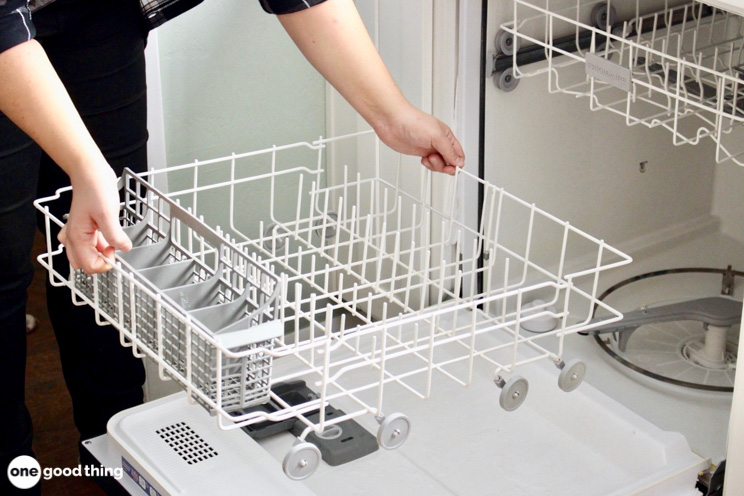
Step 1 – Check the Drain
Start by removing the bottom rack and inspecting the bottom of your dishwasher, especially the area around the drain. All sorts of things can collect down there, like bones, bits of plastic, broken glass, and other things that shouldn’t be in your dishwasher.

Step 2 – Vinegar Wash Cycle
Replace the bottom rack, place a shallow, dishwasher-safe bowl near the center of the top rack, and then pour 1 cup of white vinegar into the bowl. (You could use apple cider vinegar in a pinch, but there’s some risk of discoloration or staining the machine’s interior surfaces.)
Close the dishwasher door and start a wash cycle on your dishwasher’s hottest setting.

Step 3 – Baking Soda Wash Cycle
When the vinegar wash cycle is complete, remove the bowl and sprinkle 1 cup of baking soda into the bottom of your dishwasher. Start another hot wash cycle, and while that’s happening, wipe down the front of the dishwasher door with a damp microfiber cloth.
More Ideas You'll Love

Most dishwashers will be clean and fresh after Step 3, but tough stains and grime may make a third wash cycle necessary (see Optional Step below).

Optional Step – Bleach Wash Cycle
If your dishwasher isn’t quite as clean as you’d hoped after the baking soda wash cycle, performing a wash cycle with bleach can help. It’s particularly helpful when dealing with mold, mildew, and other tough messes.
To do it, pour 1 cup of chlorine bleach into the bottom of the dishwasher and run another hot wash cycle.
Warning: Skip this step if your dishwasher has a stainless steel interior — bleach may discolor or permanently damage stainless steel finishes.

More Tips for Deep Cleaning Your Dishwasher
If you followed all the steps above and your dishwasher still has an unpleasant odor or isn’t performing as well as you expect, try these deep cleaning tips.
Clean the Door Gasket
Persistent dishwasher odors can be caused by food particles or mildew lurking in the rubber gasket around the dishwasher door. Clean the gasket with a damp microfiber cloth, making sure to get into the folds where gunk often hides.
To prevent gasket odors in the future, leave your dishwasher door ajar after unloading clean dishes to let it dry out between uses.

Clean the Sprayer Arms
If your dishwasher is clean, odor-free, and draining correctly, but your dishes aren’t coming out sparkling clean, it may be a sign that the sprayer arms need cleaning. The holes in the sprayer arms can get clogged up by food residue and limescale, hindering your dishwasher’s performance.
To clean the sprayer arms, start by shutting off the water supply and power to your dishwasher. Remove the bottom rack from the dishwasher, then carefully remove the sprayer arms and scrub them thoroughly with warm, soapy water. (An old toothbrush or small scrub brush can help here.)
Pay special attention to the holes in the sprayer arms, and use an unfolded paper clip if needed to dislodge any blockages. When the arms are clean and dry, replace them in your dishwasher.
More Ideas You'll Love

Remove and Clean the Filter
If you’re removing your dishwasher’s sprayer arms to clean them, you should take the opportunity to clean the filter too. (In many dishwasher models, you can’t remove the filter without first removing the bottom sprayer arm.)
Refer to your dishwasher’s user manual for specific instructions on how to remove the filter, then clean it in warm, soapy water before drying it and replacing it. Don’t forget to replace the sprayer arms and bottom rack and restore the water and power supply.

How Often Should You Clean Your Dishwasher?
| Frequency | Task |
|---|---|
| Weekly | Wipe down the door and gasket and make sure the drain is clear of debris |
| Monthly | Perform the 3-step dishwasher cleaning method with baking soda and vinegar |
| As needed | Clean the sprayer arms and filter |

7 More Dishwasher Tips and Tricks
- Run your garbage disposal before starting a load of dishes to ensure it can drain properly.
- Start with hot water by running your kitchen faucet until the water feels hot to the touch before starting your dishwasher to get the most out of your wash cycle.
- Set your water heater to 120°F (50°C) to ensure the water is hot enough for cleaning dishes without being dangerously hot.
- Don’t overfill your dishwasher. Waiting to start your dishwasher until you have a full load is a good way to save water and energy, but packing it full of dishes can hinder its ability to clean them.
- Lightly rinse dishes before putting them in your dishwasher. Dishwasher detergents work best when there’s a certain amount of food residue on your dishes.
- Put caps on rusty tines. If rusty tines are leaving stains on your dishes, a set of cheap dishwasher tine caps offers a quick fix.
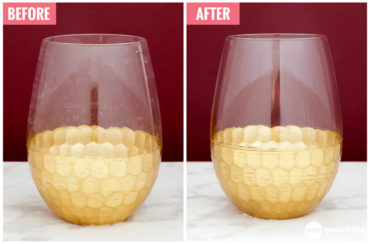
- Put a dish of vinegar in the top rack to help combat the effects of hard water, like water spots, white films, and dusty mineral residue.
Frequently Asked Questions
How Often Should I Clean My Dishwasher?
It’s a good idea to clean your dishwasher around once a month to keep it running smoothly. Regular maintenance can help prevent odors and grime buildup.
What Do I Need to Clean My Dishwasher?
Apart from white vinegar and baking soda, you only need a small bowl and a microfiber cloth for the 3-step dishwasher cleaning method. For deep cleaning tasks, you may need bleach, dish soap, an old toothbrush, or a few other basic cleaning supplies.
Can I Use Regular Dish Soap to Clean My Dishwasher?
I don’t recommend it! Dish soap is too sudsy to use in a dishwasher, so stick to vinegar and baking soda for a no-mess clean. (There’s more to know about using dish soap in the dishwasher, but that’s not the purpose of this post or question!)
How Do I Clean the Filter in My Dishwasher?
Specifics will vary by model (see your dishwasher’s user manual for direction), but most dishwasher filters are fairly easy to clean. Remove it from the bottom of your dishwasher, wash it in warm, soapy water, then dry and replace it.
What’s the Best Way to Deep Clean My Dishwasher?
The 3-step cleaning method described in this post does a great job of deep cleaning most dishwashers. Depending on how dirty your dishwasher is, you may need to follow the additional tips (i.e. cleaning the door gasket and sprayer arms) to get it truly clean.
Can I Combine the Vinegar and Baking Soda Wash Cycles into One Step?
I don’t recommend it. You’ll get better results by using vinegar and baking soda separately when cleaning your dishwasher. (This is almost always the case when using vinegar and baking soda for cleaning.)
Conclusion
Given its crucial role in kitchen cleanliness (not to mention that you can use your dishwasher for more than washing dishes), it’s in your best interest to keep your dishwasher clean and in good working order. The tips and methods in this post will help make the process quick and easy!
For those without a dishwasher or who often wash dishes by hand, don’t miss my dishwashing hacks for tips that will save you time and effort.
What’s your best tip for cleaning a dishwasher?

How To Clean A Dishwasher
Video
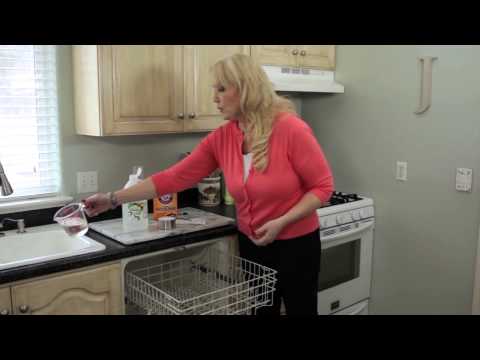
Equipment
- Dishwasher-safe cup
- Measuring Cups
Ingredients
- 1 cup distilled white vinegar
- 1 cup baking soda
- 1 cup bleach optional
Instructions
Examine the Drain
- Pull the bottom rack out, examine the drain area, and remove the foreign material you find (if any).


Vinegar Wash
- Place a dishwasher-safe cup of white vinegar on the bottom rack of your dishwasher, then run your dishwasher on a hot water cycle.

Baking Soda Wash
- After the first wash cycle, sprinkle a cup of baking soda around the bottom of the dishwasher and run it through another hot water wash cycle.


Bleach Wash (Optional)
- To eliminate mold and mildew, add ½-1 cup bleach to the bottom of the dishwasher and run another full wash cycle. (Skip this step if your dishwasher has a stainless steel interior, as bleach can corrode stainless steel.)







I have a 10 yr old Maytag built-in that was given to me by the previous owners, who had four huge dogs and the doggie dishes were washed without rinsing, in the dishwasher. I did two full extra-heat washes with CLR, and a million little hairs came out of the drain, all from the muzzles of the dogs. I do not use the heated dry cycle, because with the extra-heat wash and rinse, the dishes dry themselves in about two minutes as soon as the last water has drained and I open the door.
Please log in or create a free account to comment.However, I do take time to check the filters, clean the inside (similar to the process you describe), and have even removed the spray arm on the bottom and cleaned out the secondary filters (under the primary one which is visible). I put the dishwasher through a CLR wash once a year, and have emailed my friends who gave me the dishwasher, asking them if they want their perfectly-functioning dishwasher back (a little bit of a tease). They still have four big dogs, still wash the doggie dishes in the dishwasher, and buy a new machine once every three or four years. I’ve offered to clean their machines for them, as a thank-you for giving me that wonderful Maytag washer 10 years ago, but I think they like getting the new machines, and have not taken me up on my offer. :-)
Bottom line is that if you keep your dishwasher in top running order, it’ll last a long time, and if you don’t use the heated dry cycle, you’ll save yourself some serious money on your electric bill (and if you live in a dry climate, the moisture in the air from the dishes drying themselves is quite lovely!).
what is a CLR wash please?
Please log in or create a free account to comment.Several months ago, I noticed several “clean” pieces were greasy as I took them out of my dishwasher. There were no greasy dishes put in to wash that time so I don’t know where the grease came from. I have tried several times to use the washer, and it happens every time…some, if n’t all, come out greasy!
Please log in or create a free account to comment.I am going to try this over the weekend. I hope it will fix the problem. Washing dishes twice a day has done a number on my ha da the last few months.
You might want to notice if you are using the hottest temp and use the heat dry setting. I have the same problem when my husband uses the dishwasher and he uses the basic settings with no heat. Also the type of dishwasher pods you use can cause this. I have found the ones that contain the liquid soap vs all powder tabs do this. Hope this helps.
Please log in or create a free account to comment.On the bleach step and my dishwasher is bubbling over. Only using 1/4 cup. Don’t know what happen, just that I have a mess on my hands lol. Just a reminder to always pay attention when trying new cleaning methods.
Please log in or create a free account to comment.I love love love how to clean dishwasher – doing it right now – on the bleach step. I also love your dishwasher soap! I am telling you, I tried so so so many things to clean my dishes, it almost drove me to screaming…well, actually I did scream a few times. After trying everything under the sun, I finally found that finish Booster alone – 2 Tblsp in bottom of dishwasher (after scrubbing dishes clean) run thru short wash cycle and then full wash cycle with booster again on bottom, with finish super charged in the dispenser Got Them Clean.
And then I found your simple 3 step dishwasher soap to clean dishes (oxygen cleaner, dawn, and vinegar). Hopped right on it. It worked! I am so excited I don’t have to go through all of those steps and money anymore. Thank you.
Please log in or create a free account to comment.My dishwasher doesn’t start at all. I would appreciate any help I can get!
Please log in or create a free account to comment.Is your dishwasher plugged in! Check your power, is your washer on a seperate fuse all its own! If you have power, check to see that nothing is clogging up the drain causing the safety to automatically turn off.
Please log in or create a free account to comment.So I ran the process of a cup of vinegar as the post instructed. But it doesn’t seem like it did anything at all. The dishwasher isn’t any cleaner now. Any ideas?
Please log in or create a free account to comment.Oh no! Did you wash on a hot temperature? If it really isn’t working, then I would use a rag soaked in warm water and vinegar to wipe down the inside of the machine :-)
Please log in or create a free account to comment.You should also clean near the hinge where the bottom of the door opens. Seems crud likes to accumulate there!! Also if you have electronic buttons that you push in, make sure they don’t have any dust or crumbs – this can really mess up the controls on your panel. Don’t ask how I found out!!! LOL!!
Please log in or create a free account to comment.Thank you. These are things that are really good to know..
Please log in or create a free account to comment.Love it. Now I know why that little bit of water is always left in the bottom of my dishwasher.
Please log in or create a free account to comment.I thought it was time for a new one.
Thank you Jillee.
A Sears serviceman told me to use TANG to clean the dishwasher.
Please log in or create a free account to comment.1/4 cup original Tang in the open area and one TBSP in the soap dispenser.
Run on regular cycle.
It really does work and I also don’t know why.
I clean the garbage catcher drain in the bottom and also the plate strainer on the floor of the dishwasher before I run the cleaning cycle.
I can’t believe how dirty they get now that I’ve discovered them. LOL
The acid in the Tang helps get rid of the crud. I was also told I could use Tang and this was his explanation. hth
Please log in or create a free account to comment.I throw about 1/2 c. borax into the bottom of mine for each wash cycle, in addition to usual detergent. I also use vinegar in the rinse-aid compartment, rather than the expensive alternative(s).
Please log in or create a free account to comment.I, also, use vinegar (white) in the rinse aid compartment. Saves money and does the job…………………
Please log in or create a free account to comment.Thanks for this tip, I’d never thought of that before!!
Please log in or create a free account to comment.We live in an area of hard water and do not have a water-softener. I have gotten into the habit of pouring “a hefty slug” of vinegar into the bottom of the dishwasher when preparing it for turning on.
It has, so far, worked and I type this with crossed fingers (not easy) as the dishwasher is very old (20+yrs) and I expect it to stop any day.
The interior has been kept clean and odour free with the vinegar. I wipe the edges with a wet cloth.
My fingers are still crossed!
Please log in or create a free account to comment.Cleaning your dishwasher is vital especially if you have a newer one with electronic controls. You need to remove the cup trap that is in the bottom tray and clean it at least a couple times a month. When the electronic brains senses decreased flow through that cup it shuts down. I learned that the hard way which ended up costing me a service call.
Please log in or create a free account to comment.I use one package of kool-aid (lemonade flavor only). to clean my dishwasher. Just pour it into the soap dispenser, run water until hot then start your dishwasher. Only one step. I don’t know how or why it works, but it does a beautiful job.
Please log in or create a free account to comment.How do you pin “a good thing” to Pinterest???
Please log in or create a free account to comment.Nell,
Please log in or create a free account to comment.There should be an icon on your screen that shows the Pinterest symbol. If you click it, it should prompt you to pin it there.